A kitchen can feel dated long before its cabinet boxes have worn out. That is why a cabinet refacing comparison should begin with the condition of what is behind the doors, not simply the color or style you see from across the room. For many Fort Worth homeowners, refacing is a smart middle ground between a cosmetic update and a full cabinet replacement. For others, it can spend money on a kitchen that still has layout, storage, or structural problems.
The right choice depends on how well the existing cabinets were built, what you want the finished kitchen to do differently, and whether the surrounding work will affect the cabinet layout. A careful evaluation protects your investment and avoids the common mistake of installing attractive new doors on cabinets that are not suited for the job.
Cabinet Refacing Comparison: Refacing, Refinishing, or Replacing
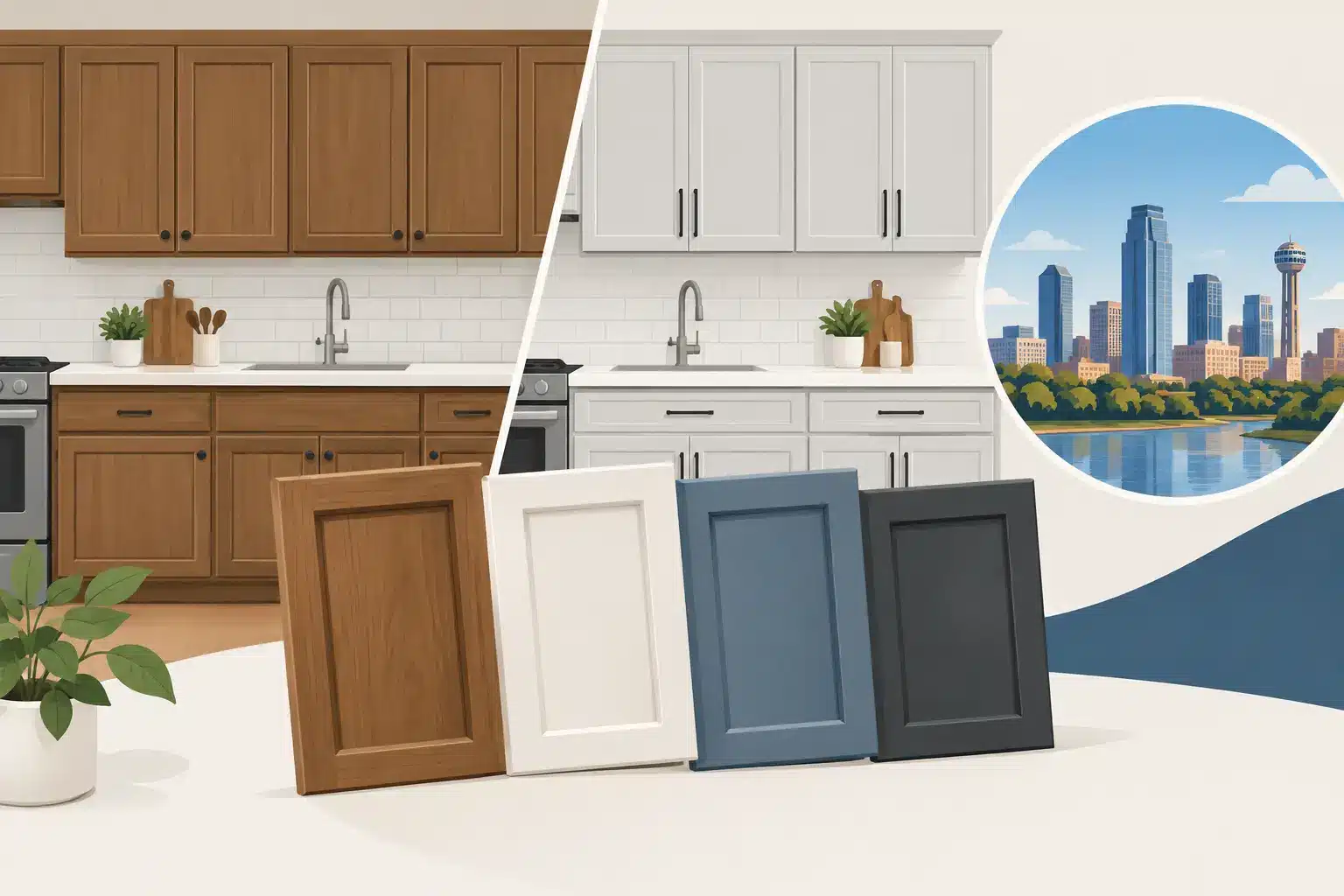
Cabinet refacing keeps the existing cabinet boxes in place. The visible exterior surfaces are covered with a new material, usually wood veneer or a rigid laminate, and the old doors and drawer fronts are replaced. New hinges, pulls, trim, and molding can complete the change. The cabinet interiors and basic footprint generally remain the same.
Refinishing is different. It uses the existing doors, drawer fronts, and cabinet faces, then changes their finish through painting, staining, or refinishing work. This can be an effective choice when solid wood doors are in good condition and the homeowner likes the door style but wants a different color.
Full replacement removes the existing cabinets and installs new boxes, doors, drawers, and hardware. It gives the greatest freedom to change the layout, add storage, adjust cabinet heights, relocate appliances, or correct poorly built original cabinets. It also involves more demolition, more coordination, and typically a larger budget.
The question is not which option is universally best. It is which one addresses the real problem in your kitchen without paying for work that does not improve function or long-term durability.
When cabinet refacing makes good sense
Refacing is often a strong option when cabinet boxes are sturdy, square, and securely attached, but the doors are worn, dated, or no longer fit the style of the home. Older kitchens with plywood boxes or well-built hardwood frames can be especially good candidates. If the current layout works for cooking, cleanup, and daily family traffic, there may be no need to tear out cabinets simply to change their appearance.
This approach can also work well when a homeowner wants a coordinated update with new countertops, backsplash tile, flooring, or lighting while keeping appliance locations in place. New shaker-style doors, updated drawer fronts, soft-close hardware, and finished end panels can give a kitchen a substantially different look without the scope of a complete rebuild.
Refacing usually creates less disruption than replacement because the cabinet boxes stay in place. There is less demolition and fewer opportunities for damage to nearby walls, flooring, and finishes. That does not mean the work is casual. Accurate measurements, proper surface preparation, material matching, door alignment, and clean trim installation determine whether the finished cabinets look professionally built or visibly added onto.
The limits of refacing
Refacing cannot solve a poor layout. If the refrigerator blocks a walkway, the sink base is too small, the corner cabinets waste usable space, or the kitchen lacks adequate storage, replacing doors will not change those daily frustrations. Refacing is also limited when homeowners want to add a large island, move plumbing, relocate a range, or create an open connection to another room.
It is not the right answer for damaged cabinet boxes, water-swollen particleboard, sagging shelves, failing drawer slides, loose face frames, or cabinets that were poorly installed from the start. Veneer and new doors can improve appearances, but they should not be used to cover structural or moisture-related issues. The underlying cabinet needs to be sound.
Material compatibility matters as well. Not every box construction accepts refacing materials equally, and some factory finishes require careful preparation to achieve dependable adhesion. A contractor should inspect cabinet sides, face frames, end panels, and interior conditions before presenting refacing as a lower-cost alternative.
Cost Is More Than the Cabinet Quote
Refacing is generally less expensive than full cabinet replacement, but homeowners should avoid comparing only the first number on an estimate. The final cost depends on the size of the kitchen, door style, material selection, cabinet modifications, hardware, trim, countertop removal and installation, and related electrical or plumbing work.
A refacing project can become less economical if it requires extensive repairs, custom box alterations, new cabinet sections, or significant work to make older cabinets fit updated appliances. In those cases, replacement may provide better value because the budget is already moving toward a more involved installation.
Replacement also carries costs beyond cabinetry. Walls may need patching after removal, floors may not extend under the old cabinets, and plumbing or electrical connections may need adjustment. These are normal project considerations, not necessarily reasons to avoid replacement. They simply need to be identified early, included in the scope, and managed by someone who understands how each trade affects the next.
A clear estimate should explain what is included: demolition, protection of adjacent areas, disposal, cabinet preparation, door and drawer installation, hardware, trim, adjustments, and any countertop or backsplash coordination. Vague allowances can make a low initial price look attractive until important parts of the project appear as change orders.
Appearance and Durability Depend on the Details
A successful refacing job should look intentional from every angle. Cabinet ends, exposed sides, toe kicks, valances, and molding need to match the new doors rather than reveal the age of the original boxes. Door gaps should be even, drawers should operate smoothly, and hardware should be installed consistently. These details are where craftsmanship shows.
For a painted look, homeowners should compare refacing with professionally painting existing cabinets. Painting can be less expensive when doors are structurally sound and the current profile still fits the desired design. It also allows more color flexibility. However, damaged or heavily grained doors may require more preparation, and a painted finish will not create the sharper lines of new door fronts.
For a stained wood appearance, refacing can offer better consistency than trying to stain existing cabinets that have aged differently over time. New wood components and matching veneer can create a more uniform finish, though natural wood variation should still be expected. A quality installer will discuss grain direction, edge treatment, sheen, and how new materials will meet existing trim or flooring.
Hardware should not be treated as an afterthought. New hinges and drawer slides can improve everyday use, but they must be compatible with the cabinet construction and door style. Soft-close hardware is a practical upgrade, yet proper alignment and adjustment matter more than the label on the box.
Questions to Ask Before Choosing a Direction
Before committing to refacing or replacement, look beyond a showroom door sample. Ask whether the existing boxes are solid enough for another decade or more of use. Consider whether the present layout supports how your household cooks, stores food, entertains, and moves through the kitchen. Be honest about what you dislike: is it the finish, the door style, the lack of storage, or the entire floor plan?
It also helps to think ahead. If you expect to replace countertops, flooring, appliances, or backsplash in the near future, plan those decisions together. Cabinet work affects countertop measurements, appliance clearances, tile termination points, and sometimes flooring transitions. Coordinating the work from the start helps prevent avoidable rework.
Homeowners should also ask who will manage the complete scope. A cabinet-only installer may handle doors well but leave you to coordinate countertop fabricators, electricians, plumbers, painters, and tile installers. A remodeling contractor can evaluate the full project, identify conflicts before work starts, and maintain one accountable point of contact.
Choosing the Right Scope for Your Home
A well-built kitchen does not need a complete teardown just because its doors look dated. On the other hand, a kitchen with failing boxes or a frustrating layout deserves more than a surface-level update. The best cabinet decision is the one that improves the way your home functions while putting money into materials and workmanship that will hold up.
For Fort Worth homeowners, a site evaluation is the practical starting point. A contractor should inspect the cabinet structure, ask how the kitchen is used, review related remodeling goals, and provide a straightforward scope without high-pressure sales. Barrington One Construction approaches that decision with the same focus used on larger kitchen renovations: protect the home, plan the work carefully, and recommend the level of improvement that makes sense for the investment.