A cabinet finish can change the entire direction of a kitchen remodel. When homeowners weigh painted versus stained cabinets, the right answer is rarely just about what looks best in a showroom. It comes down to the cabinet material, the amount of natural light in the room, how the kitchen is used, the style of the home, and how much maintenance the homeowner is comfortable taking on over time.
Both options can perform well when the cabinets are properly built, prepared, and installed. Problems usually begin when a finish is chosen without considering the wood underneath it, or when surface preparation is treated as an afterthought. A quality cabinet project accounts for all of it before the first door is sprayed or stained.
Painted Versus Stained Cabinets: The Core Difference
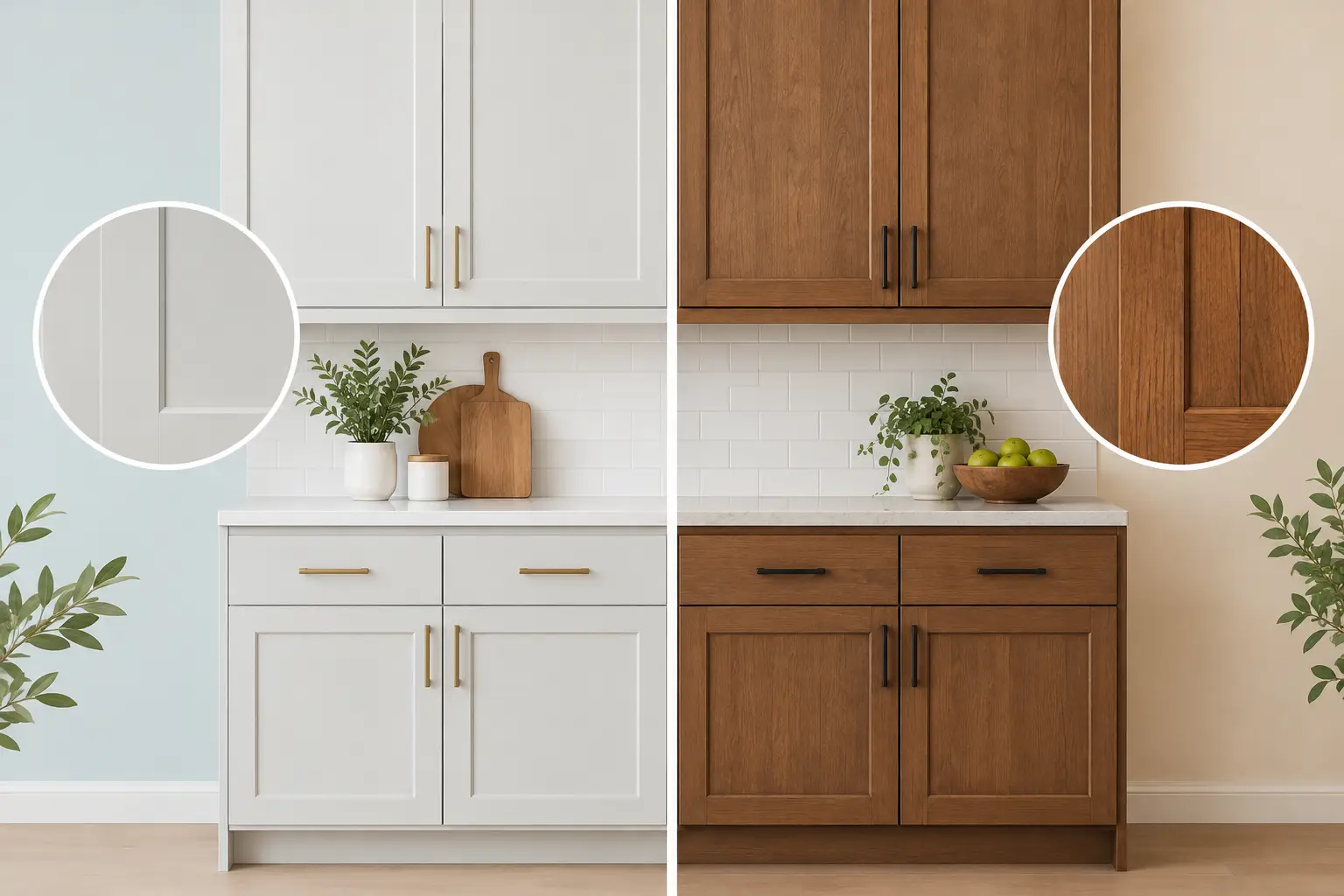
Painted cabinets cover the material beneath them with an opaque color. They create a clean, consistent appearance and work well with everything from traditional raised-panel doors to simple, modern shaker profiles. White, warm off-white, soft gray, green, navy, and black remain common choices because paint gives homeowners far more control over the kitchen’s color palette.
Stained cabinets allow the grain and natural variation of the wood to remain visible. The stain changes the wood’s color and depth, but it does not hide the character of the lumber. Oak, maple, hickory, cherry, alder, and walnut can all accept stain differently, so samples matter. A stain that looks rich on one wood species may look flat, blotchy, or much darker on another.
This difference is more than visual. Paint highlights the cabinet door profile and the overall room design. Stain highlights the wood itself. If the goal is a crisp, tailored kitchen, paint often fits the plan. If the goal is warmth, texture, and a more natural material presence, stained cabinetry deserves a close look.
What Painted Cabinets Do Well
Painted cabinets are especially useful when a homeowner wants a specific color or needs to brighten a kitchen with limited natural light. In many Fort Worth homes, a kitchen remodel includes opening a wall, adding an island, changing the flooring, or updating older dark finishes. Light-painted cabinets can make those layout improvements feel more open and intentional.
Paint also offers consistency. Wood naturally varies in grain, mineral streaks, and tone. That variation is part of the appeal of stain, but it can be a drawback for homeowners who want every door and drawer front to match closely. A well-executed painted finish creates a uniform field of color across the cabinetry.
Painted cabinets are not limited to white. A two-tone design can place a deeper color on the island and a lighter color around the perimeter. It can also provide definition in a large kitchen without introducing competing wood tones. The key is to coordinate cabinet color with countertops, backsplash tile, flooring, and the amount of daylight the room receives.
The Trade-Off: Paint Can Show Movement and Wear
Painted finishes require careful expectations. Solid wood expands and contracts as humidity changes. Over time, hairline cracks can appear at joints in painted wood doors, particularly around rails and stiles. This is a normal response to wood movement, not always a sign of poor construction.
Paint can also show chips, scuffs, and grime more readily in high-contact areas such as around pulls, trash pullouts, and sink-base doors. Dark colors may reveal dust and fingerprints. Bright white may show cooking residue near handles. A durable factory-grade finish, quality hardware, and sensible cleaning habits help, but no cabinet finish is maintenance-free.
For painted cabinetry, the substrate matters. Medium-density fiberboard can provide an exceptionally smooth painted door surface because it has no grain pattern. Plywood cabinet boxes and hardwood components may still be used where strength and structure are needed. A contractor should explain what materials are being proposed and why, rather than treating all painted cabinets as the same product.
Where Stained Cabinets Have an Advantage
Stained cabinetry has depth that paint cannot duplicate. The grain variation gives a kitchen a layered, established feel, particularly in homes with wood flooring, exposed beams, brick, stone, or traditional architectural details. A natural or medium wood stain can soften a kitchen with large expanses of stone and tile.
Stain is also generally more forgiving of minor wear. A small nick or scratch may be less noticeable because the finish is visually broken up by grain and color variation. Touch-up is not always simple, since matching an aged stain can take skill, but the damage often blends more naturally than a chip in a smooth painted door.
For homeowners concerned about visible joint lines, stained solid wood doors can be a practical choice. Wood movement still occurs, but the finish tends to conceal it better than paint. This is one reason stained cabinets remain a sound long-term option for active family kitchens.
The Trade-Off: Wood Species Controls the Result
Stain does not correct poor material selection. It reveals it. A strong grain pattern, such as red oak, remains prominent under a stain. Maple can absorb stain unevenly without the right preparation. Alder is often selected for a rustic look because its knots and character marks show through, but those features are not right for every design.
Before approving a stained finish, ask to see a physical sample made from the same wood species and close to the intended door style. Review it beside the countertop, backsplash, and flooring whenever possible. Small samples can look very different once installed across an entire wall of cabinets.
Stained cabinets can also make a small or poorly lit kitchen feel heavier when the finish is very dark. That does not rule them out. It may simply mean using a lighter stain, improving lighting, or balancing wood cabinetry with lighter countertops and wall finishes.
Durability Depends on Construction, Not Just Finish
Homeowners often ask which option lasts longer. The more useful question is which cabinet construction and finish system fits the kitchen’s use. A painted cabinet with a properly cured, durable finish can serve a family well for many years. A stained cabinet with thin veneer, weak hinges, or poorly built boxes can still disappoint.
Look beyond the door color. Cabinet boxes should be square, securely assembled, and appropriate for the load they will carry. Drawer slides should operate smoothly under real weight. Hinges need proper adjustment. Cabinet installation must account for uneven walls, floors, and ceiling lines so doors align correctly and countertops have a solid, level base.
Moisture management is equally important. Sink cabinets, dishwasher panels, refrigerator water lines, and exterior walls require attention during a remodel. No finish holds up well when water is allowed to sit at seams or when a slow plumbing leak goes unnoticed. Proper installation protects the investment better than a quick cosmetic update.
Cost, Repairs, and Future Changes
The cost difference between painted and stained cabinets is not always predictable. Some painted finishes cost more because they require extensive sanding, priming, spraying, curing, and quality control. Premium wood species and custom stain matching can also raise the price of stained cabinetry. Door style, cabinet construction, modification needs, and installation complexity often have a greater effect on the final budget than the finish alone.
Painted cabinets are easier to change visually later. Repainting can give a kitchen a new direction without replacing cabinet boxes, provided the original cabinetry is in good condition and the prep work is done correctly. Stained cabinets can be refinished too, but changing from a dark stain to a light stain, or from stain to paint, usually involves more labor and may not produce the same result across every component.
For repairs, both finishes benefit from a professional touch-up process. Keep extra paint or a labeled stain sample from the project. Cabinet finishes can shift slightly with age and sun exposure, so having the original product information makes future repairs more accurate.
How to Choose the Right Finish for Your Home
Start with the kitchen’s permanent elements. If the home has warm wood floors, rustic beams, or traditional trim that you want to preserve, stained cabinets may create better continuity. If the remodel includes cleaner lines, lighter surfaces, and a more updated layout, painted cabinets may support that direction.
Then consider daily use. Families who cook often, have young children, or expect heavy traffic should think about where wear will occur and choose a finish that fits their expectations. This does not mean one option is automatically better. It means the finish should be selected with honest attention to how the room will be lived in.
Finally, review full-size samples under the kitchen’s actual lighting. Morning sun, recessed lighting, under-cabinet lights, and adjacent room colors all affect what a finish looks like. A planned, well-installed cabinet package should feel right in the home, not just on a sample board.
The best choice is the one that supports your home’s character, your maintenance preferences, and the way your household uses the kitchen. Take the time to look at real material samples and discuss construction details before making the final selection. That early care is what helps a new kitchen look finished on installation day and continue serving the home well for years.