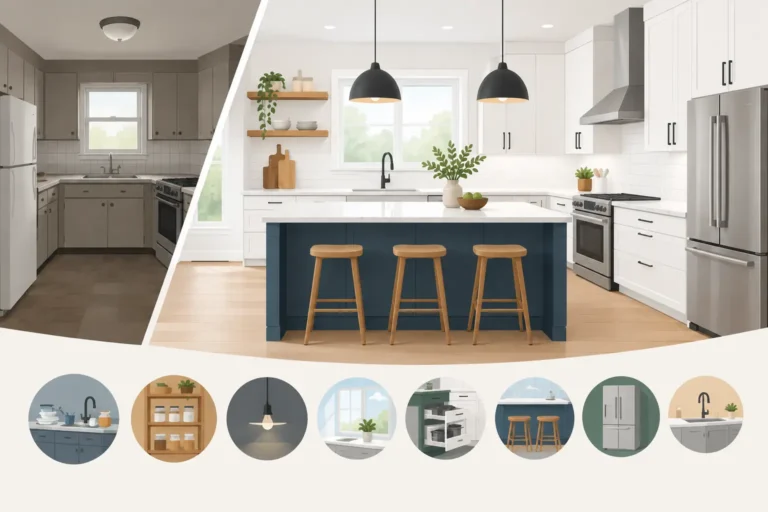
A kitchen can have plenty of cabinets and still feel short on storage. The difference usually comes down to how the space is planned inside each cabinet. Well-designed storage solutions for kitchen cupboards put frequently used items within easy reach, make awkward corners usable, and reduce the clutter that collects on countertops.
For Fort Worth homeowners planning a kitchen remodel, cabinet storage should be part of the design conversation from the beginning. Adding an organizer after cabinets are installed can help, but it rarely delivers the same fit, strength, or everyday convenience as storage designed around the cabinetry, appliances, and household routine.
Start With How Your Kitchen Is Actually Used
The best storage plan is not based on what looks good in a showroom. It is based on where your family prepares meals, where groceries land, what cookware you use most, and which areas create daily frustration.
A household that cooks most nights needs a different layout than a kitchen used mainly for quick breakfasts and weekend entertaining. Families may need accessible snack storage and a dedicated place for lunch containers. Homeowners who enjoy cooking may prioritize heavy-duty drawers for pots, pans, mixing bowls, and small appliances. The goal is not to add an organizer to every opening. It is to make each cabinet earn its space.
Before finalizing a cabinet plan, take inventory of what you own. Measure larger appliances, serving pieces, bakeware, and stockpots. This prevents a common remodeling mistake: installing attractive cabinetry that has no practical home for the items that made the old kitchen feel crowded.
Build Storage Around Work Zones
Storage works best when it supports the task being performed nearby. Keep everyday dishes and glasses close to the dishwasher for easier unloading. Place cooking utensils, oils, and spices near the range, while keeping cookware in deep drawers below or beside it. Reserve a cabinet near the refrigerator or pantry for food containers and lunch supplies.
This approach also protects your investment. When items have a designated place, homeowners are less likely to overfill cabinets, stack heavy cookware on weak shelves, or leave countertop appliances out simply because putting them away is inconvenient.
The Most Useful Storage Solutions for Kitchen Cupboards
Some cabinet upgrades consistently make a noticeable difference because they solve common access and organization problems. The right selection depends on the cabinet layout, but these features are worth considering during a remodel.
Deep Drawers for Pots, Pans, and Dishes
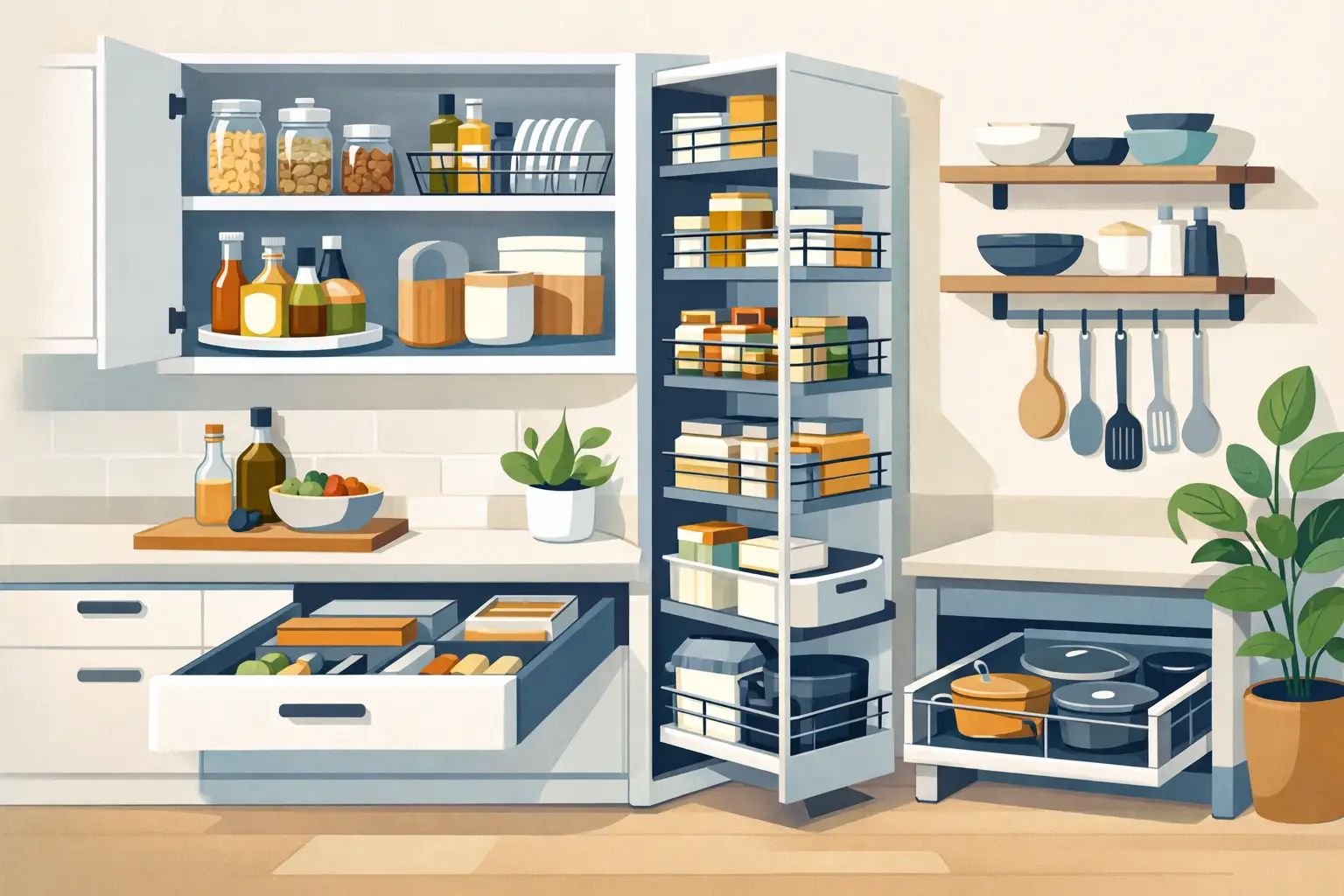
Deep drawers are one of the most practical alternatives to lower cabinet shelves. Instead of kneeling down and reaching into a dark back corner, you pull the contents toward you. Quality full-extension drawer hardware allows the drawer to open completely, so pans and serving dishes are visible and accessible.
Deep drawers also work well for everyday plates and bowls, particularly for homeowners who want to reduce bending. For heavier loads, proper box construction and correctly rated slides matter. A drawer that looks solid but is built with undersized hardware may sag or fail under the weight of cast iron cookware, ceramic dishes, or bulk pantry items.
Pull-Out Shelves in Base Cabinets
Not every lower cabinet needs to be converted to drawers. Pull-out shelves are a strong option for cabinets that store small appliances, mixing bowls, pantry staples, or larger containers. They provide much of the access benefit of a drawer while working within a traditional cabinet opening.
The trade-off is that pull-outs use some interior space for their slides and construction. In a narrow cabinet, a well-planned drawer may be more efficient. In a wide base cabinet, pull-outs can make good use of a deep opening that would otherwise become a hard-to-reach storage void.
Corner Cabinet Solutions That Reduce Waste
Corner cabinets are often the least efficient part of an older kitchen. A basic lazy Susan can help, but it is not the only option, and it is not always the best one. Rotating trays work well for lightweight items when the opening and interior dimensions are adequate. For some layouts, a pull-out corner system provides better access to the back of the cabinet.
There is no one-size-fits-all answer for corners. More complicated mechanisms cost more and have more moving parts. In certain kitchen designs, the most practical choice is to use the corner for simple, less frequently used storage and put the budget toward high-use drawers elsewhere. A good cabinet plan evaluates the available space, the homeowner’s priorities, and the long-term value of each upgrade.
Vertical Dividers for Trays and Boards
Baking sheets, cutting boards, platters, and cooling racks are frustrating to store in a standard base cabinet. Vertical dividers inside a narrow cabinet keep these items upright and separated, so you can pull out one pan without shifting a stack of metal trays.
This is a small detail with a major daily benefit. It is particularly useful next to the range or near a prep area, where sheet pans and cutting boards are used often. Because the items are stored on edge, the cabinet width can be modest while still providing meaningful capacity.
Roll-Out Trash and Recycling Centers
A dedicated pull-out trash cabinet keeps waste containers out of sight and gives them a defined place near the sink or prep area. Many homeowners choose a two-bin setup for trash and recycling. Larger families may need additional capacity or a separate location for pet food, compost, or paper recycling.
Placement deserves careful planning. A trash pull-out directly below the main prep space can be convenient, but it should not interfere with dishwasher access or a primary walkway. During a kitchen remodel, these small layout decisions are easier to solve before cabinets, countertops, and appliances are in place.
Drawer Dividers That Stay Put
A utensil drawer with a loose plastic tray is better than nothing, but custom or adjustable dividers make better use of the actual drawer dimensions. Consider dedicated sections for flatware, cooking tools, knives, wraps, and frequently used gadgets. Deep drawer dividers can also organize food storage containers and lids.
The key is avoiding overcomplication. Dividers should support the way you already work, not force every item into an overly specific compartment. A practical layout leaves room for the tools that change over time.
Do Not Overlook Upper Cabinets and Pantry Storage
Upper cupboards are often treated as simple shelving, yet they can create just as much frustration as lower cabinets. Adjustable shelves are essential because glassware, mugs, bowls, and small appliances do not all require the same vertical clearance. Shelves should be installed and supported according to the cabinet manufacturer’s specifications, especially when storing heavier dishware.
A narrow pull-out pantry can be useful beside a refrigerator or in a tight wall section, but it is not always the highest-capacity choice. A wider pantry cabinet with roll-out shelves may hold more and provide better visibility. For homeowners who buy groceries in bulk, depth, shelf strength, and clear access should take priority over a trendy feature.
Lighting also matters. Interior cabinet lighting is not necessary in every kitchen, but it can be helpful in deep pantries and tall utility cabinets. Under-cabinet lighting improves task visibility on countertops, which can reduce the tendency to leave prep tools and ingredients scattered across the kitchen.
Plan Storage Before Cabinet Installation
Storage upgrades affect cabinet widths, appliance clearances, electrical placement, trim details, and the final budget. That is why they should be selected during the design phase, not treated as a last-minute accessory.
At Barrington One Construction, practical design planning starts with the homeowner’s goals and the realities of the existing space. Some kitchens need a modest cabinet reconfiguration and better interior accessories. Others benefit from moving walls, adjusting plumbing, or redesigning the entire work triangle. No job is too big or small, but every project deserves the same attention to proper installation and long-term function.
A contractor should also account for the cabinets themselves. An organizer is only as reliable as the cabinet box, mounting surface, and hardware supporting it. Correct measurements, level installation, and careful adjustments are what allow drawers, pull-outs, and doors to operate properly over time.
The most successful kitchen cupboards do not feel like storage furniture. They quietly support the way you cook, clean, gather, and live at home. Choose features that solve your real daily problems, and the kitchen will feel more organized long after the remodel is complete.