If you are asking where to buy kitchen storage cabinets, you are probably already feeling the gap between how your kitchen looks and how it actually works. Maybe your pans are stacked in the wrong place, your pantry is overloaded, or you are trying to make an older Fort Worth kitchen serve a modern family. The right place to buy cabinets depends on more than price. It depends on whether the cabinets fit your layout, hold up over time, and solve the storage problems that made you start looking in the first place.
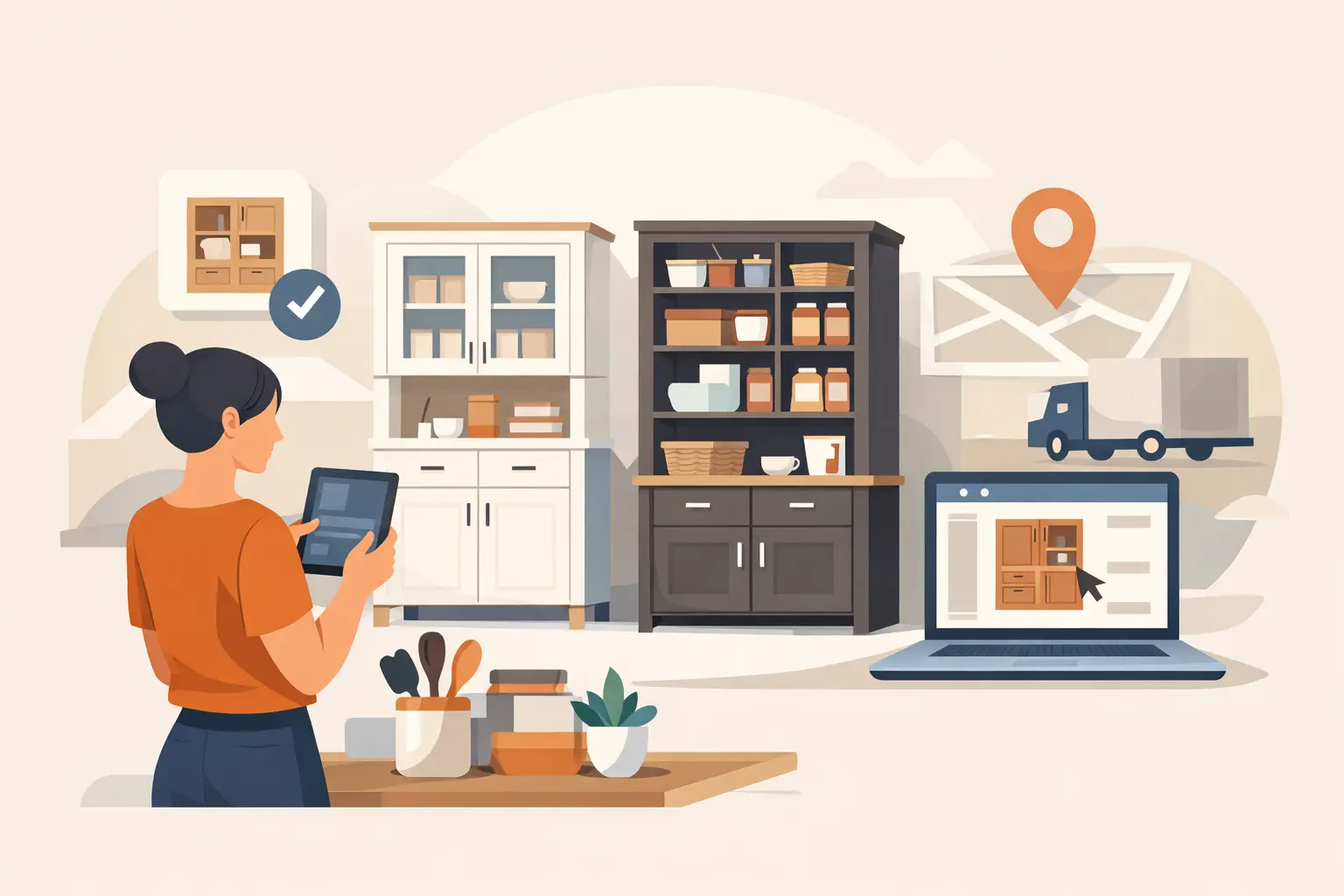
For most homeowners, there are four real buying paths: big box stores, kitchen showrooms, local cabinet shops, and a remodeling contractor who handles cabinet sourcing as part of the full project. Each option can work. The difference is how much guidance you get, how flexible the design is, and how likely you are to end up with cabinets that look good in a photo but fall short in daily use.
Where to buy kitchen storage cabinets for your project
The simplest option is a big box retailer. Stores like these are popular because they offer predictable pricing, broad availability, and cabinet lines that range from basic stock boxes to semi-custom selections. If your kitchen layout is straightforward and you are replacing cabinets in roughly the same footprint, this route can make sense. It is often the fastest path for a modest update.
The trade-off is that stock and entry-level lines usually work best when the room already behaves. If your kitchen has awkward corners, uneven walls, low ceiling transitions, or wasted dead space, off-the-shelf cabinets can leave performance on the table. You may save money up front and still end up living with fillers, poor drawer access, or storage that never feels truly planned.
A kitchen showroom gives you more design support and usually a better look at finish quality, door styles, hardware, and interior accessories. This matters more than people expect. A cabinet can appear solid online and feel very different once you open the drawer box, inspect the finish, or check how the hinges operate. Showrooms also tend to offer better guidance on matching cabinet style to the age and character of the home.
That said, a showroom is only as good as the planning behind it. Some focus heavily on product selection and less on real-world installation conditions. If no one is addressing floor level, appliance clearances, soffits, lighting, or ventilation, then even a quality cabinet line can run into problems once construction starts.
Local cabinet shops are often the best fit when storage needs are highly specific. If you want tray dividers, appliance garages, deeper pantry pull-outs, or cabinetry built around an unusual wall condition, a local shop can often produce a better result than a standard catalog line. This route also gives you more control over wood species, finish details, and sizing.
The downside is that quality varies. One shop may produce excellent work with tight tolerances and proper finishing methods, while another may cut corners you will not notice until doors start shifting or paint begins to fail. Before buying from a local cabinet maker, homeowners should ask detailed questions about box construction, finish process, lead time, and installation responsibility.
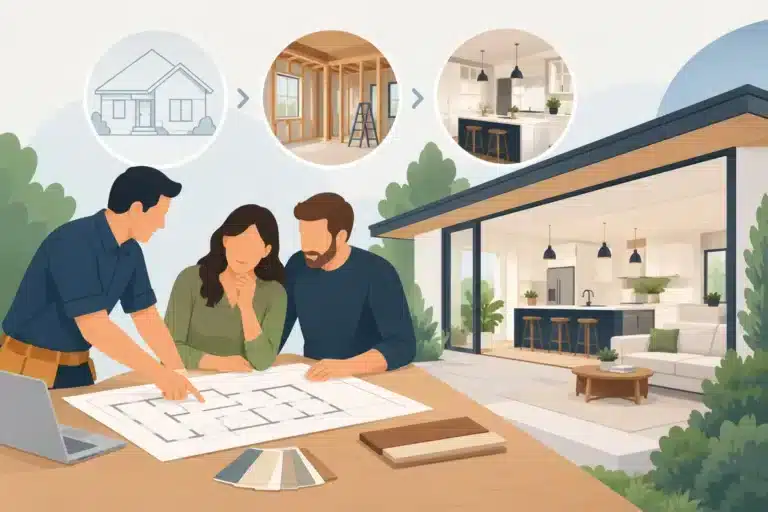
The fourth path is buying cabinets through a remodeling contractor as part of a full kitchen renovation. For many homeowners, this is the most practical option because cabinet selection is tied directly to layout, construction, and installation. Instead of choosing cabinets in isolation, the storage plan is built around the room, the family, and the way the kitchen is actually used.
That matters when walls are being moved, flooring is changing, lighting is updated, or plumbing and electrical work need to align with the cabinet plan. In a well-managed remodel, cabinet sourcing is not a separate shopping trip. It is part of a coordinated process designed to protect the budget and avoid installation surprises.
What matters more than the place you buy from
Homeowners often start with price, which is understandable, but cabinet value comes from construction quality and fit. A lower-cost cabinet that installs poorly, wastes space, or wears out early is not really cheaper. It just spreads the cost out in a more frustrating way.
Start with cabinet box material. Plywood and quality furniture board both have their place, but thin, poorly made boxes tend to show weakness quickly. Drawer construction is another major point. Dovetail drawers, full-extension glides, and dependable soft-close hardware usually perform better over time than builder-grade alternatives.
Finish quality matters too, especially in kitchens that see heat, moisture, and heavy traffic. Painted cabinets can look clean and current, but the finish process has to be done correctly or they will show wear around doors and drawer fronts sooner than expected. Stained finishes may hide use better in some households. There is no universal right answer. It depends on style, traffic, and how much maintenance you are willing to accept.
Then there is storage design. This is where many purchases go wrong. Homeowners compare door styles and color samples while overlooking how the cabinets will function. Deep drawers near the cooktop, vertical storage for sheet pans, trash pull-outs in the right location, and pantry organization that matches buying habits can make a bigger difference than the cabinet finish itself.
Best places to buy based on your goals
If your goal is the lowest initial cost, big box stock cabinets are usually the starting point. They work best for smaller updates, rental properties, or kitchens where the existing layout already functions well enough. Just be realistic. The lower price often comes with fewer size options, more fillers, and less refined storage.
If your goal is a balance between customization and budget, semi-custom cabinet lines sold through a showroom or contractor are often the strongest value. You get more flexibility in width, height, depth, finish, and accessories without stepping fully into custom pricing. For many families, this is the sweet spot.
If your goal is maximum function in a long-term home, custom cabinets or contractor-led cabinet planning usually make the most sense. This is especially true in older homes, kitchens with structural quirks, or projects where you are changing the footprint. Better planning at this stage can add storage without making the kitchen feel crowded.
If your goal is a fully managed renovation, buy through the professional managing the entire project. A contractor who handles layout, cabinet ordering, installation sequencing, and finish coordination can help reduce finger-pointing if something is off. That single point of accountability matters. It protects your timeline and your investment.
Questions to ask before you buy kitchen storage cabinets
No matter where you shop, ask who is measuring the kitchen and who is responsible if the cabinets arrive wrong or do not fit. Ask about lead times, because cabinet schedules can affect demolition, countertop templating, and appliance installation. Ask what accessories are available now and whether replacement parts will still be easy to get later.
You should also ask how the installer plans for uneven floors and walls. In remodeling, very little is perfectly square. Proper installation is not a detail. It is the difference between doors that align and doors that drift, countertops that sit correctly and countertops that reveal every flaw in the room.
It also helps to ask whether the cabinet plan reflects how your household cooks and stores things. A retired couple, a busy family with children, and homeowners who entertain often should not all get the same storage layout. Good cabinet buying is not just product selection. It is problem solving.
In Fort Worth-area remodels, many homeowners find that the best answer is not one store or one brand. It is a buying process that starts with the room, the budget, and the way the home is lived in. That is why companies like Barrington One Construction approach cabinets as part of the full kitchen plan rather than a stand-alone purchase. When design, construction, and installation are aligned from the start, the finished kitchen tends to work better and hold up better.
A good cabinet purchase should leave you with less daily friction, not just a nicer set of doors. Buy from the source that can deliver the right fit, the right installation, and the right storage for the way you actually live.