That top shelf gets filled fast, and usually with the wrong things. Homeowners often ask what to store in upper kitchen cabinets after they realize their daily-use items are too high, heavy, or awkward to reach. The best answer is not just about fitting more in. It is about making the kitchen safer, easier to use, and better aligned with how your household actually cooks.
In a well-planned kitchen, upper cabinets should support the workflow, not fight it. That means keeping frequently used, heavier, or fragile items where you can access them comfortably. The higher the storage, the more selective you need to be.
What to Store in Upper Kitchen Cabinets
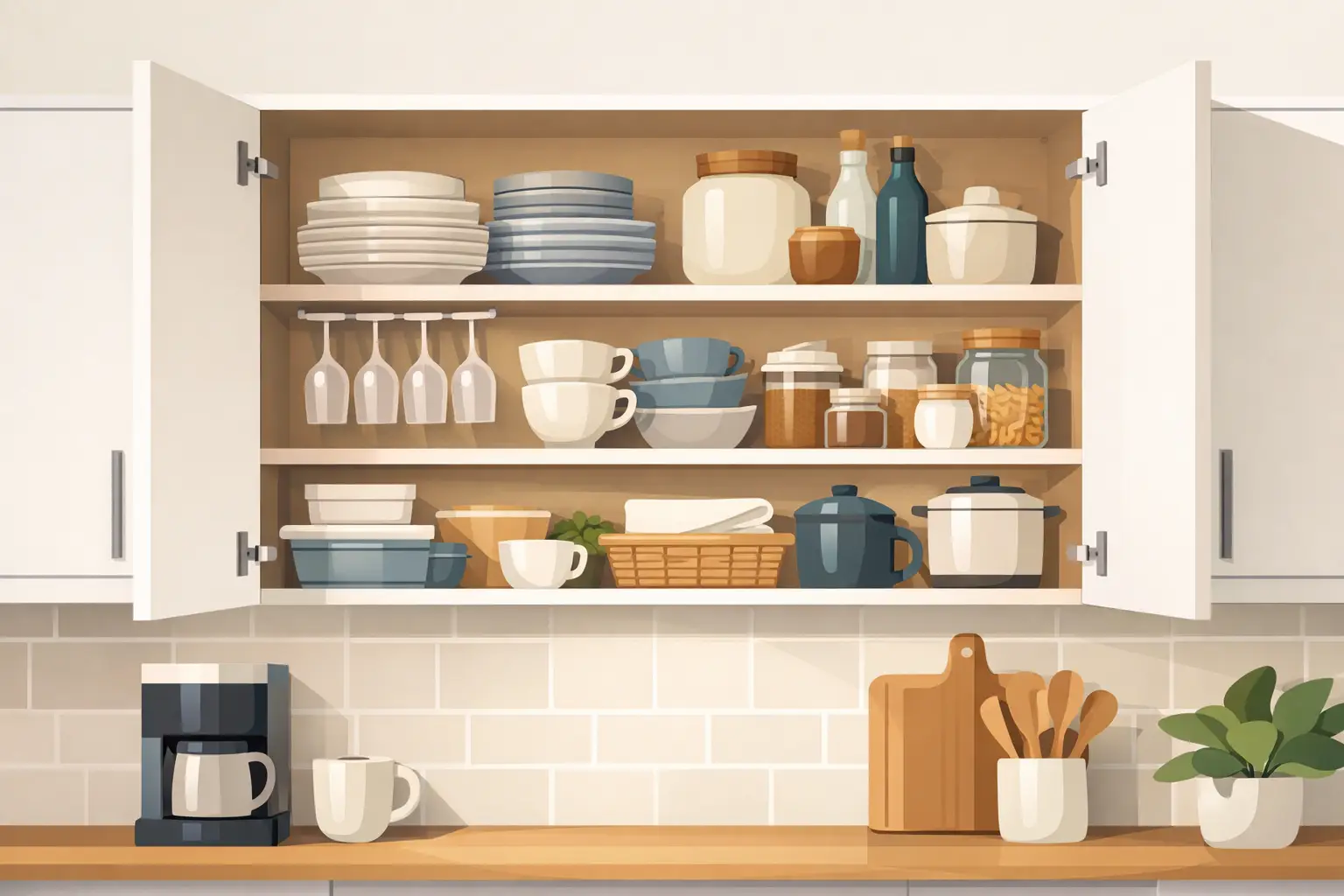
Upper cabinets are best for lightweight, occasional-use, and category-specific items. Think drinking glasses, everyday plates if the shelf height is reasonable, coffee mugs, serving bowls, small pantry overflow, plastic food containers, and specialty cookware you do not use every day.
What belongs there depends on the cabinet location. Cabinets near the dishwasher are a good fit for dishes and glasses because unloading is quicker. Cabinets above the coffee station work well for mugs, filters, and beans. Cabinets farther from the main prep zone can hold holiday platters, vases, or backup supplies that do not need prime real estate.
The main rule is simple. If an item is heavy, used every day, or risky to lift down from above shoulder height, it probably should not live in an upper cabinet.
Start with weight, frequency, and safety
The most common organizing mistake is treating every cabinet the same. In practice, the right storage plan comes down to three factors: how heavy the item is, how often you use it, and how safe it is to handle overhead.
Heavy stacks of stoneware, Dutch ovens, bulk food containers, and countertop appliances are better kept in lower cabinets or deep drawers. Lifting that kind of weight down from an upper shelf puts strain on your shoulders and increases the chance of dropping something. This matters even more in homes with children, older adults, or anyone shorter in height.
Daily-use items should also stay easy to reach. If you use a cereal bowl every morning or a skillet every night, storing it high up adds extra motion to every routine. That may sound minor, but good kitchen design is built on reducing friction. Small inefficiencies add up fast in a busy household.
Fragile items need special thought too. Glassware, stemware, and serving pieces can go in upper cabinets, but only if the shelf height and cabinet depth make them easy to grab without knocking something over. Overcrowding upper cabinets is where chipped dishes and broken glasses usually start.
Best everyday items for upper cabinets
For most homes, upper cabinets work best when they hold lighter items used regularly but not constantly. Standard drinking glasses, coffee mugs, cereal bowls, salad plates, and lightweight dinnerware are all reasonable choices if they can be reached without stretching.
There is some flexibility here. In one kitchen, everyday plates may fit well in an upper cabinet right above the dishwasher. In another, deep drawer storage is the better option because it is easier on the back and more accessible for the whole family. It depends on cabinet height, user height, and how the kitchen is laid out.
Food storage containers can also work well in upper cabinets, especially lighter plastic sets. The better move is often to separate containers from lids and avoid stacking too high. If you have to unload half the shelf to reach one matching lid, the storage is not really working.
Dry goods can go up top too, but only in moderation. Items like tea, coffee, spices you do not use daily, baking decorations, and unopened pantry backups are good candidates. Bulk flour, large oil bottles, and oversized cans are usually better stored lower where they are easier to handle.
What should stay out of upper cabinets
If you are deciding what not to put overhead, start with anything heavy or awkward. Stand mixers, air fryers, stacks of cast iron, large serving platters, and small appliances used often should stay below counter height or in a dedicated appliance garage if the design allows.
Cleaning chemicals are another item to think carefully about. Some homeowners store them in upper cabinets to keep them away from kids, but that can create a different risk if they are above food or dish storage. In most kitchens, a secured sink-base cabinet or utility storage area is the better solution.
Very large pantry items are also poor candidates. Cases of water bottles, oversized cereal boxes, paper towel packs, and warehouse-store purchases can overload shelves and make cabinets harder to use. Upper cabinets are not the place for storage that feels like lifting at the gym.
Use cabinet location to decide what goes where
A good kitchen works in zones. Upper cabinet storage should match the activity below or beside it.
Near the sink, it makes sense to store glasses, everyday dishes, or dish soap refills. Near the range, upper cabinets can hold spices, oils in smaller containers, and cooking items you reach for during meal prep. Near the refrigerator, you might store lunch containers, snack baskets, or breakfast items.
This is where remodel planning makes a real difference. Cabinet placement is not just about appearance. It affects how many steps you take, how often you bend or reach, and whether the kitchen feels easy to use five times a day or only looks good in photos. Thoughtful storage planning is one of the details that separates a pretty remodel from a functional one.
What to store in upper kitchen cabinets with tall ceilings
Tall kitchens create a separate challenge. If your upper cabinets extend to the ceiling, the highest shelves should be reserved for true occasional-use storage. Seasonal platters, holiday dishes, large roasting pieces, and specialty entertaining items are a better fit there than anything used weekly.
This is also where uniform bins can help, as long as they are not overloaded. A labeled bin for holiday baking tools or party supplies is easier to bring down safely than a shelf full of loose items. The goal is controlled access, not just hidden clutter.
If you need a step stool to reach a shelf, that shelf should not hold anything essential to your daily kitchen routine. That is a simple standard, but it prevents a lot of frustration.
Organization matters as much as storage choice
Even the right items can become a problem if the cabinet interior is poorly organized. Upper cabinets work better when shelf spacing is adjusted to the height of the items inside. Too much empty vertical space leads to unstable stacks. Too little space causes scraping, crowding, and broken edges.
Shelf risers, turntables, and simple cabinet organizers can help, but they should support a clear plan rather than compensate for one. If the cabinet is too deep, items get lost in the back. If the shelves are too high, the space gets underused. In many remodels, homeowners benefit from revisiting shelf placement altogether instead of just buying more organizers.
Glass-front uppers deserve even more discipline. They can look sharp in the right kitchen, but they are less forgiving if the contents are mismatched or cluttered. These cabinets are best for neatly stacked dishes, glassware, or a small number of display-worthy items.
When remodeling, plan storage before cabinets are ordered
One of the best times to answer what to store in upper kitchen cabinets is before the remodel begins. Cabinet dimensions, heights, depths, and door styles all affect what the space can realistically hold. So does the layout around appliances, windows, and traffic flow.
This is where experienced planning protects your investment. A kitchen should be built around the way you live, not around generic cabinet counts. If a homeowner wants easier dish storage, it may make more sense to shift more capacity into base drawers. If they entertain often, upper cabinets may need to support glassware and serving pieces near a beverage zone. If there are mobility concerns, lowering some upper storage or reducing reliance on it can make the space work better long term.
At Barrington One Construction, this kind of practical design thinking is part of what makes a kitchen remodel perform well after the dust is gone. Good craftsmanship matters, but so does how every cabinet functions once the kitchen is back in daily use.
A simple standard that works
If you want a straightforward rule, store lighter, safer, and less frequently used items in upper cabinets, and keep heavy, daily-use, or awkward items lower. Then fine-tune from there based on cabinet location and the people using the kitchen.
A kitchen does not have to be oversized to work well. It has to be planned well. When storage matches real habits, the room feels cleaner, faster, and easier to live in every day. That is usually the difference between a kitchen that looks finished and one that actually works.