
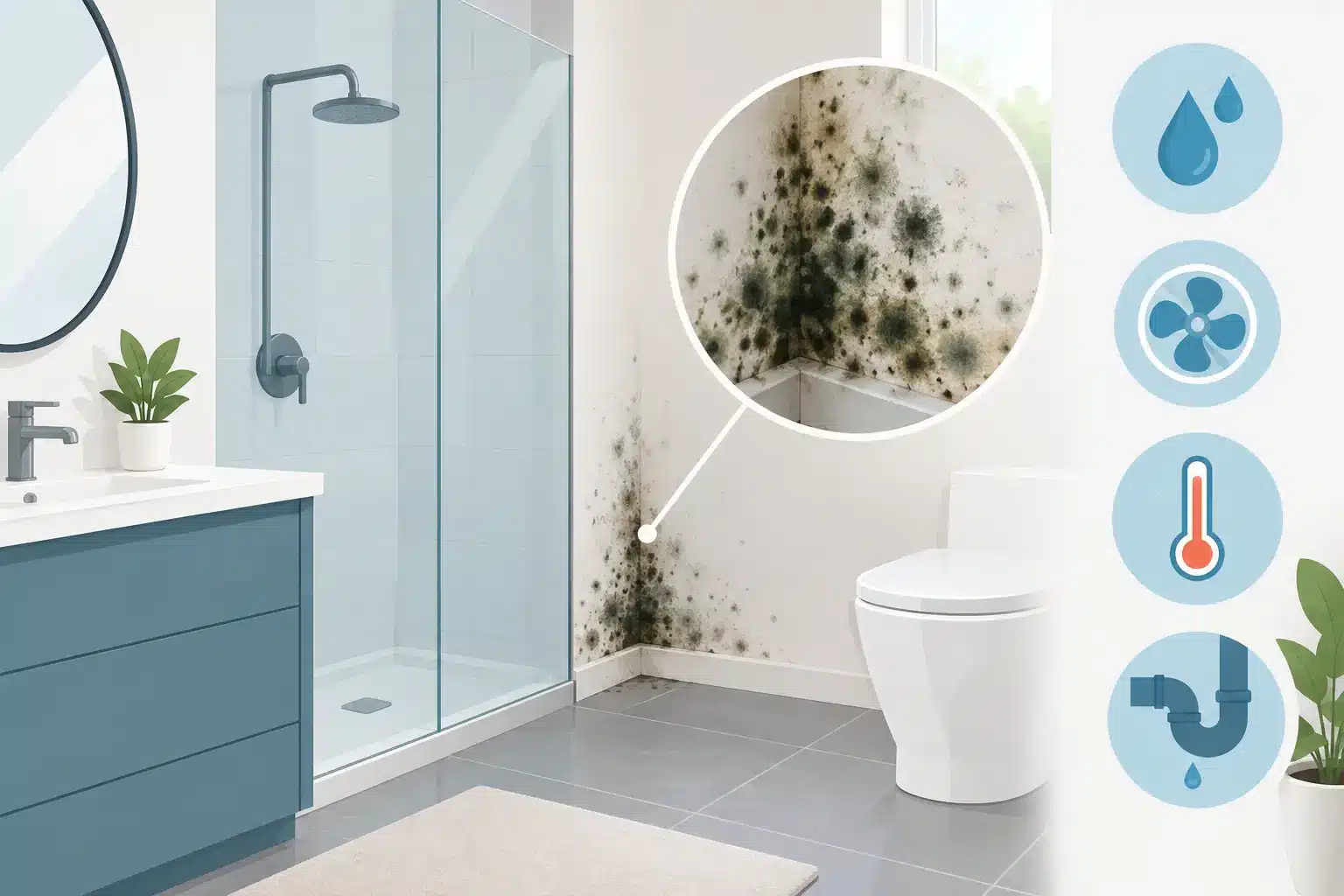
A bathroom can look clean on the surface and still have the conditions mold needs behind a vanity, along a shower wall, or above the ceiling. So, what causes bathroom mold growth? Nearly every case comes back to one issue: moisture stays in the room or inside the wall assembly longer than it should.
Mold spores are already present in normal indoor air. They become a problem when they find steady moisture, a surface to grow on, and enough time. In Fort Worth homes, hot weather, humid summers, long showers, and air-conditioned interiors can create that combination quickly. The visible spot is often only the symptom. The real work is finding out why that area is staying wet.
What Causes Bathroom Mold Growth Most Often?
Bathroom mold is rarely caused by one dramatic event. More often, it develops from repeated small amounts of moisture: steam that has nowhere to go, condensation on cold surfaces, a slow plumbing leak, or water getting through a failed shower detail.
A properly functioning bathroom should dry out after use. The mirror may fog during a shower, but the walls, ceiling, floor edges, and shower enclosure should not remain damp for hours. When they do, mold has an opportunity to establish itself on painted drywall, caulk, grout, dust buildup, wood framing, and the paper facing on some wallboard products.
The key distinction is between surface moisture and concealed moisture. Surface mold on a ceiling may be related to ventilation. Mold at the base of a wall, around a toilet, or at the edge of a shower can point to a leak or an installation issue that deserves closer attention.
Humidity and Poor Ventilation
The most common cause of light, recurring mold on bathroom ceilings is excess humidity combined with inadequate ventilation. Every shower releases a large amount of moisture into the air. Without a properly sized, properly vented exhaust fan, that moisture settles on cooler surfaces.
An open window can help in mild weather, but it is not a dependable replacement for mechanical ventilation. In warm, humid conditions, opening the window may bring more humid outside air indoors. A bathroom exhaust fan should move moist air outside the home, not simply into the attic. Venting into an attic can create a different moisture problem above the ceiling, where it may affect insulation, roof decking, and framing.
Fan performance also depends on more than the label on the unit. A fan may be undersized for the room, clogged with dust, connected to a long or poorly routed duct, or rarely used. Homeowners sometimes turn the fan off as soon as the shower ends, but the room still needs time to dry. Running it during bathing and for a period afterward is usually more effective.
Condensation Can Mimic a Leak
Condensation is especially common on exterior walls, around windows, metal fixtures, and uninsulated ducts. It occurs when warm, moist bathroom air touches a colder surface and turns into water droplets. If the same corner of the ceiling or wall develops mildew during certain seasons, condensation may be part of the answer.
This does not automatically mean a major renovation is needed. Sometimes the correction is better ventilation, air sealing, insulation, or a fan duct repair. It depends on where the moisture is forming and whether the area is dry once humidity is controlled.
Plumbing Leaks and Hidden Water Damage
A slow leak can feed mold without leaving an obvious puddle. Supply lines under a sink, drain connections, toilet seals, shower valves, and tub overflows are all common sources. Even a small leak becomes significant when it wets drywall or wood repeatedly.
Pay attention to stains, soft baseboards, peeling paint, loose flooring, musty odors, or a vanity cabinet that feels swollen near the bottom. Those signs do not prove mold, but they do indicate that water may be reaching materials that should remain dry.
Toilets deserve particular attention. A failed wax ring can allow water to escape around the base of the toilet when it is flushed. The flooring may appear fine at first, while moisture works into the subfloor beneath it. Likewise, a shower valve leak inside a wall can go unnoticed until staining appears in an adjacent room or mold develops around an access opening.
When there is a suspected plumbing leak, cleaning visible mold is not a lasting fix. The water source needs to be repaired, wet materials need time to dry, and damaged drywall, insulation, flooring, or framing should be evaluated before the bathroom is closed back up.
Failed Caulk, Grout, and Shower Details
Caulk and grout are often blamed for water damage, but they serve different roles. Caulk is a flexible sealant used where two surfaces meet and move differently, such as where a tub meets tile or at inside corners. Grout fills tile joints, but it is not waterproofing.
Cracked, missing, or separated caulk can let water enter gaps around a tub, shower pan, countertop, or trim piece. Worn grout may allow more water to pass through a tile assembly, particularly in a shower that is used daily. But replacing caulk or regrouting alone cannot correct a failed waterproofing system behind the tile.
A properly built tile shower includes a continuous waterproof layer beneath or behind the finish material, with correct drain and pan details. Tile and grout are the finished surface, not the only line of defense against water. If mold, loose tile, persistent dampness, or staining keeps returning in the same shower area, the issue may be behind the wall rather than at the grout line.
This is one reason workmanship matters in bathroom remodeling. A shower can look excellent when it is new, yet still develop moisture problems if waterproofing, penetrations, transitions, or drainage details were handled poorly. Correcting it early is generally less disruptive than waiting for water damage to spread into framing or adjacent rooms.
Wet Materials That Never Fully Dry
Bathrooms contain several materials that hold moisture longer than homeowners expect. Bath mats, towels, shower curtains, wood cabinetry, drywall, and the dust that collects on exhaust grilles can all support mildew when they stay damp.
A wet bath mat left on the floor, for example, can trap moisture against grout joints and flooring edges. Towels bunched in a hamper or hung too close together may develop mildew odors that seem like a bathroom mold problem. Shower curtains and liners need room to dry fully after use, especially along folds and at the bottom hem.
This type of mold is usually easier to address than concealed water damage. Regular laundering, drying, and cleaning make a difference. Still, if the same materials become damp day after day, look back to the room’s ventilation and overall humidity level.
Poor Airflow Around Fixtures and Cabinets
Air needs a path into the bathroom for an exhaust fan to work well. A tightly closed door with no adequate gap or transfer path can reduce how much air the fan actually removes. Large vanities placed against exterior walls can also create cooler, low-airflow areas where condensation and mold are more likely.
Cabinets under sinks deserve occasional inspection. They are enclosed, dark, and often crowded with cleaning products, which makes a small leak easy to miss. Check for water marks, warped cabinet bottoms, corrosion on supply valves, and a persistent musty smell.
During a remodel, practical design choices can reduce future risk. These may include locating the fan appropriately, using moisture-resistant materials in the right locations, providing access to serviceable plumbing, and detailing shower transitions carefully. The best choice depends on the room layout, the existing structure, and how the bathroom is used.
When Cleaning Is Enough and When It Is Not
Small areas of surface mildew caused by humidity can often be cleaned once the moisture issue is corrected. The cleaner matters less than the follow-through: dry the room, operate the fan, address condensation, and watch to see whether the growth returns.
Repeated mold in the same location is different. If it reappears after cleaning, spreads beyond a small surface area, accompanies a musty odor, or appears near soft materials and water stains, assume there may be an unresolved moisture source. Do not paint over it or apply fresh caulk without investigating the condition underneath. Covering the evidence can delay the repair and increase the eventual scope of work.
A careful inspection should consider the shower or tub surround, plumbing fixtures, exhaust ducting, attic space above the bath when accessible, exterior walls, and flooring around toilets and vanities. The goal is not to guess at the most convenient repair. It is to identify where water is entering or lingering and correct that condition properly.
Bathrooms are built to handle water, but they are not built to stay wet. When a room dries efficiently and the shower, plumbing, and wall systems are installed correctly, mold has far fewer opportunities to take hold. If a spot keeps coming back, treat it as useful information about the room, not just a cleaning chore.