
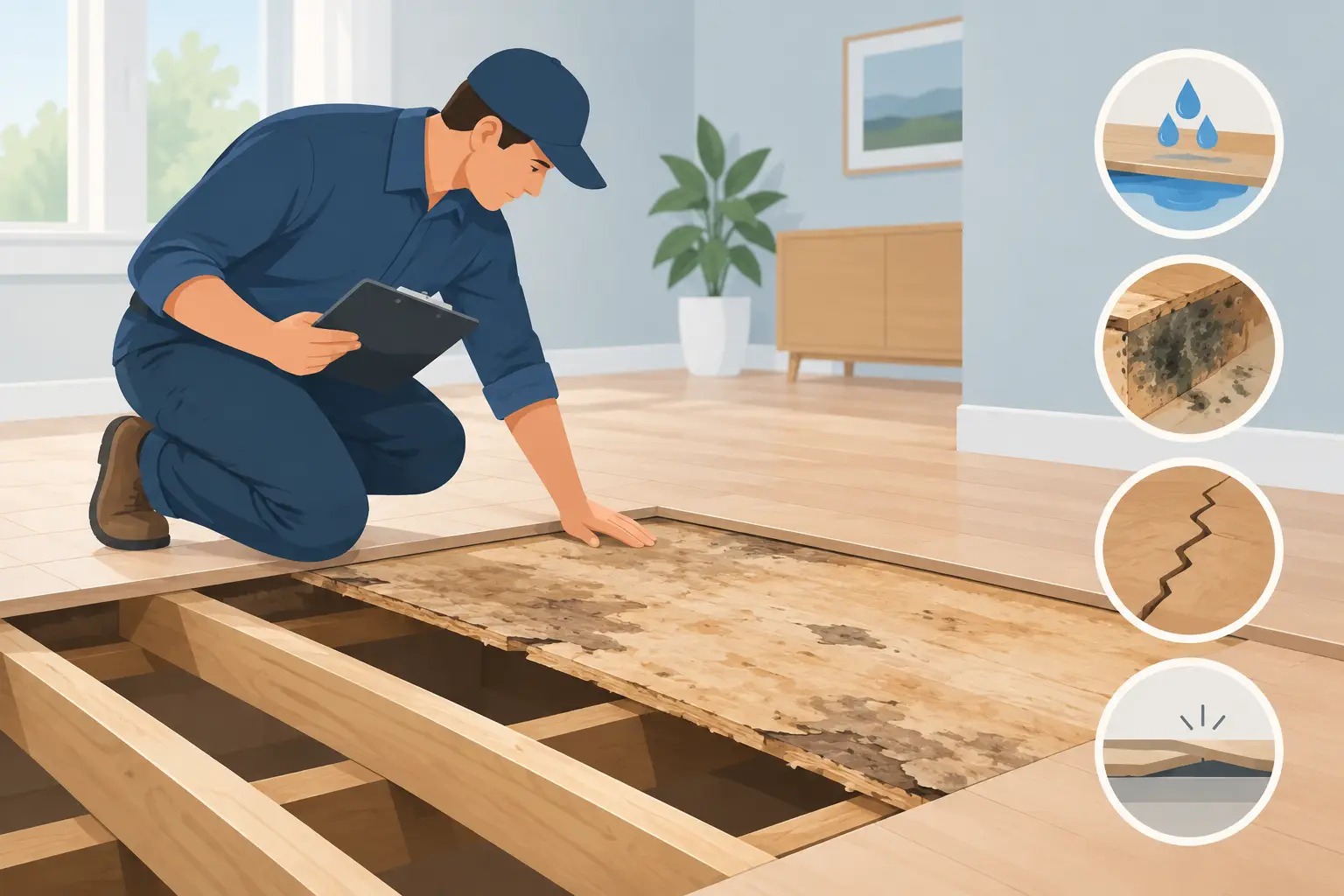
A new floor can make a room look completely different, but it cannot correct a weak surface beneath it. If you are asking, should you replace subfloor, the answer depends less on the age of the home and more on what the material is doing today. Soft spots, persistent moisture, movement underfoot, and visible deterioration deserve attention before tile, hardwood, luxury vinyl, or new carpet goes down.
The subfloor is not a finish material. It is the structural layer fastened to the floor framing, and it provides the stable base your finished flooring needs. Covering a damaged subfloor may save money in the short term, but it can lead to cracked tile, separating floor joints, uneven transitions, and repairs that require the new flooring to be removed later.
What the Subfloor Does for Your Home
In most wood-framed homes, the subfloor is typically plywood or oriented strand board, often called OSB. It is installed over the floor joists and beneath the underlayment and finished flooring. Its job is to distribute weight across the framing, provide a solid nailing or bonding surface, and limit movement across the floor.
That last point matters during a remodel. Tile and grout are especially unforgiving of flexing. Hardwood and laminate can develop gaps or noisy spots when the surface below moves. Even resilient flooring can show dips, ridges, or impressions if the subfloor has been compromised.
Not every home has a traditional wood subfloor on the first level. Many Fort Worth-area homes are built on concrete slabs, where flooring may be installed over a moisture barrier, leveling material, or underlayment instead. Upper floors and pier-and-beam homes are more likely to have wood subflooring. A proper inspection identifies the assembly before anyone recommends a repair.
Should You Replace Subfloor or Repair It?
A damaged area does not automatically mean the entire room needs new subflooring. Localized repairs are often the right solution when the problem is limited, the surrounding panels remain structurally sound, and the source of moisture has been corrected.
Replacement is generally the better choice when the panel has lost strength. Wood that has swelled, delaminated, crumbled, or remained wet for an extended period will not regain its original performance simply because it dries. The same is true of rot. A contractor may be able to remove and replace only the affected section, but that section needs to extend back to solid framing so the patch is properly supported.
The decision also depends on the flooring being installed. A minor imperfection that might be acceptable beneath carpet could be a problem beneath large-format tile. Tile installation requires a flat, stable substrate and a properly selected underlayment or uncoupling system. Skipping those steps can void manufacturer requirements and create a floor that fails long before it should.
Signs the Subfloor May Need Attention
Homeowners often notice the finished floor first. A careful evaluation looks beyond the surface to determine whether the issue is cosmetic, structural, or related to moisture.
Watch for these warning signs, particularly in bathrooms, kitchens, laundry rooms, entryways, and around exterior doors:
- A floor that feels soft, spongy, or noticeably lower in one area
- Squeaks, popping, or movement that develops when someone walks across the floor
- Tile cracks, loose grout, separating vinyl seams, or flooring that will not stay flat
- Staining, musty odors, swelling, or visible deterioration from below in a crawl space
- Past or active water damage from a toilet leak, failed supply line, shower pan, dishwasher, or roof leak
A squeak by itself does not always mean the subfloor needs replacement. It may be caused by loose fasteners, slight movement between the subfloor and joists, or framing that needs additional blocking. On the other hand, a soft area near a shower or toilet should not be dismissed as a simple flooring issue. Moisture can travel farther than the visible stain, especially beneath sheet flooring or tile.
Water Damage Is the Issue to Solve First
Replacing damaged wood without correcting the water source is a temporary repair. Before new subfloor material is installed, the cause must be identified and resolved. That may involve repairing plumbing, replacing a failed shower pan, correcting exterior flashing, addressing a leaking appliance connection, or improving drainage and ventilation below the home.
Bathrooms require particular care because slow leaks can remain hidden for months. A toilet flange that sits too low, a loose wax ring, or a shower enclosure with failed waterproofing can send moisture into the floor system without creating an obvious puddle. By the time flooring begins to feel soft, the damage may include underlayment, subflooring, baseboards, framing, and sometimes drywall.
During a renovation, this is also the time to evaluate whether the original construction details were adequate for the room’s use. Proper waterproofing around showers, correct flange height at toilets, and carefully sealed transitions help protect the repair from repeating the same problem.
What a Proper Subfloor Repair Involves
Quality work starts with access and inspection. Finished flooring, underlayment, and damaged material are removed carefully enough to expose the true extent of the problem. The contractor checks the nearby panels, joists, blocking, fasteners, and plumbing or moisture source rather than assuming the visible soft spot is the entire issue.
When replacement is needed, damaged sections are cut back to solid, supported edges. New blocking may be installed between joists to support seams and provide a secure fastening surface. Replacement panels should match the required thickness and be installed with the correct spacing, adhesive where appropriate, and fastener schedule. The goal is a firm, even surface that works with the finished flooring system.
Level and flat are not the same thing. A floor can be structurally sound but still need flattening before tile or certain floating floors are installed. Conversely, a floor can appear level but flex too much because of framing or subfloor damage. A professional plan addresses both conditions instead of using floor patch as a substitute for structural repair.
When You Can Leave the Existing Subfloor in Place
Existing subflooring can often remain if it is dry, flat enough for the new flooring, firmly attached, and free of decay or significant swelling. Minor squeaks may be corrected with additional screws from above during a flooring replacement. Small surface defects can sometimes be addressed with an approved patching compound or underlayment, depending on the product being installed.
Older homes may have multiple layers of flooring and underlayment, which creates another decision point. Removing unnecessary layers can improve door clearances, prevent awkward transitions, and reveal concealed damage. In other cases, a stable existing layer may be useful as part of the new assembly. The right approach comes from examining the room, not applying one rule to every house.
Avoid the Costly Shortcut
It is tempting to install new flooring over a problem because demolition adds time and expense. But a hidden weak spot rarely stays hidden after a remodel. New flooring may make the issue more noticeable, and the cost of removing recently installed materials can exceed the cost of doing the subfloor work correctly the first time.
This is where experienced project oversight protects your investment. A contractor should explain what was found, show you the affected area when possible, identify the likely cause, and provide a clear scope for repair. No high-pressure sales tactics are needed when the condition of the floor supports the recommendation.
Barrington One Construction approaches subfloor repairs as part of the larger remodeling picture. Whether the project involves one damaged bathroom area or a full kitchen or whole-home renovation, the work should account for framing, moisture control, finished-floor requirements, and clean protection of the surrounding home.
If a floor feels different under your feet, treat that change as useful information. Addressing it before selecting new finishes gives you a better foundation for the remodel and greater confidence that the finished space will perform the way it should.