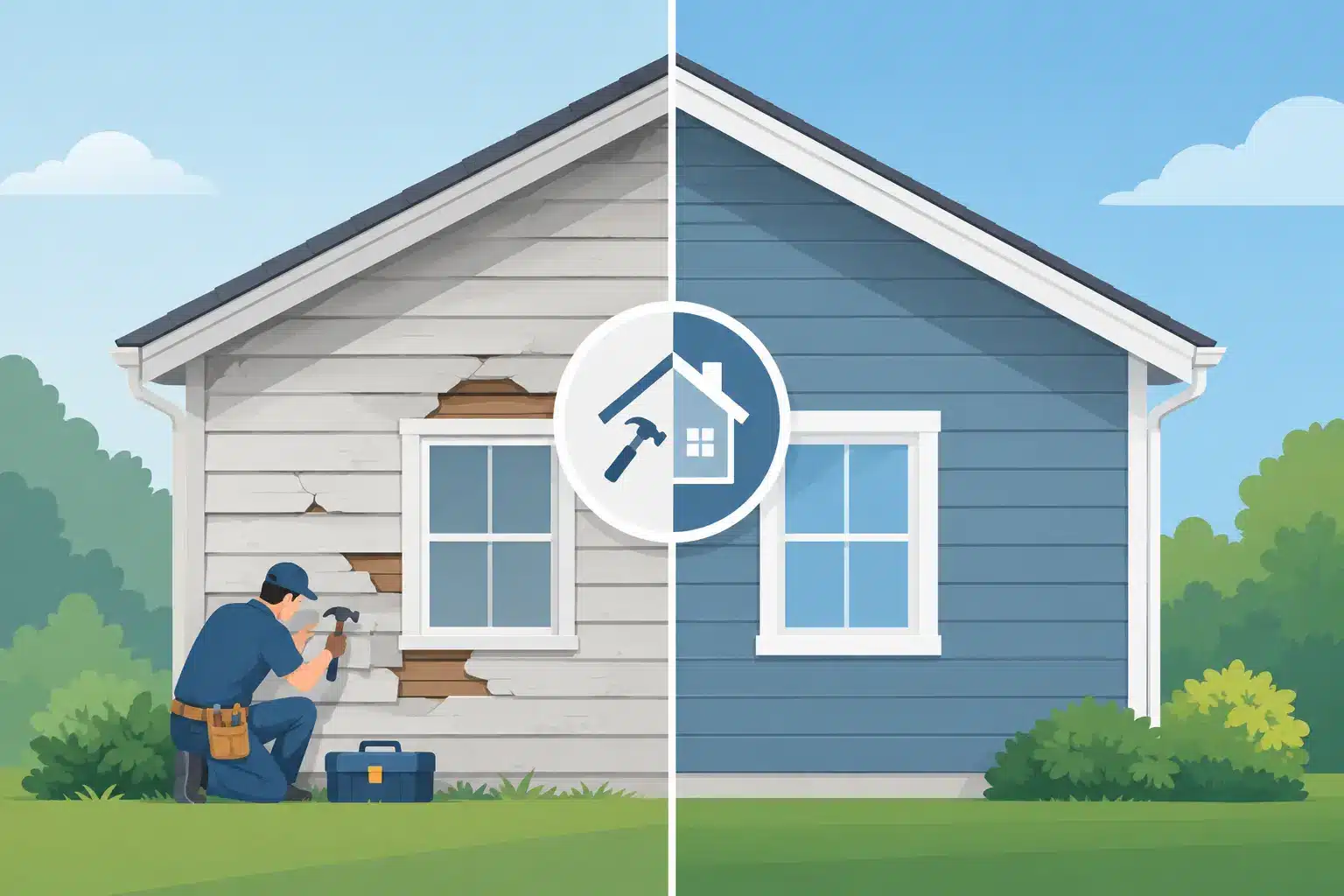
A loose board near a window or a patch of peeling paint may look like a small exterior issue. Sometimes it is. Other times, it is the visible edge of moisture damage that has already reached the wall framing. The siding repair vs replacement decision should begin with the condition behind and around the damaged area, not just how the surface looks from the driveway.
For Fort Worth homeowners, weather adds another layer to the decision. Intense sun, wind-driven rain, hail, shifting soil, and seasonal temperature changes all put exterior materials and their fasteners to work. A proper evaluation identifies whether a focused repair will protect the home or whether replacing a larger section will prevent repeated expense and more serious damage later.
When siding repair is the right investment
Repair is often the sensible choice when the damage is isolated and the remaining siding is sound. A cracked board from an impact, a few pieces of loose trim, a small area of rot caused by a failed gutter, or localized damage around a door can usually be addressed without replacing every wall of the home.
The key is confirming that the problem truly is localized. A contractor should remove enough material to inspect the wall sheathing, framing, flashing, and moisture barrier where needed. Replacing a damaged board without correcting the source of water intrusion only covers up the issue. If a gutter is overflowing, flashing is missing, or a window installation is allowing water behind the siding, that underlying condition needs to be corrected at the same time.
A quality siding repair should include proper fastening, spacing, and flashing details for the material in place. For wood siding, that may mean sealing cut ends and using compatible primer and paint. For fiber cement, it means following manufacturer requirements for clearances, fasteners, and caulking locations. Vinyl repairs require room for expansion and contraction. These details are not cosmetic. They help the repaired area perform like the rest of the exterior.
Repair is particularly worthwhile when your existing siding still has substantial service life left and a close material match is available. It also makes sense when you are planning a larger exterior renovation in a few years and need a durable, responsible solution now.
Signs replacement deserves a closer look
Replacement becomes the stronger option when damage is widespread, repeated, or tied to aging materials that are no longer protecting the structure reliably. One repaired section can be practical. Multiple repairs across several elevations may indicate that the exterior has reached the point where piecemeal work is no longer the best value.
Pay close attention to these conditions:
- Rot, swelling, soft spots, or crumbling material in multiple locations
- Repeated paint failure, warped boards, or loose panels after prior repairs
- Water stains, musty odors, or damaged drywall inside exterior walls
- Hail, wind, or sun damage affecting broad areas of the siding
- Discontinued materials that cannot be matched without an obvious patchwork appearance
The most serious concern is hidden moisture. Siding is part of a system that sheds water away from the home. Once water reaches the sheathing or framing, it can lead to wood deterioration, mold conditions, insulation damage, and costly interior repairs. Replacing siding may provide access to correct these issues before they become a larger structural project.
Full replacement also creates an opportunity to improve details that are difficult to address with spot repairs. That can include new house wrap, properly integrated window and door flashing, improved trim, pest-resistant materials, and better transitions where roofs, patios, or masonry meet the exterior wall. Homeowners often notice the visual improvement first, but the weather-protection work behind the siding is where much of the long-term value lies.
Siding repair vs replacement: compare the real costs
The lower initial price of repair can be appealing, and in the right situation it is absolutely the correct choice. However, the least expensive estimate is not always the lowest long-term cost. A small repair that must be repeated every year or two, especially when paint and material matching are involved, can become more expensive than addressing the full failing area once.
Replacement costs more upfront because it includes more material, labor, disposal, and preparation. It may also reveal needed repairs to sheathing, framing, or flashing. That is not a reason to avoid replacement when it is warranted. It is a reason to work from a detailed estimate that separates the known scope from possible concealed conditions and explains how those conditions will be handled.
Material selection also affects the calculation. Vinyl may have a lower installed cost, while fiber cement can offer a more substantial appearance and strong durability when installed correctly. Engineered wood products can provide the look of wood with varying maintenance requirements. Natural wood has a distinctive character but requires consistent care. The right choice depends on the home’s architecture, maintenance expectations, budget, and the condition of adjacent trim and exterior features.
Color matching matters as well. Even if the manufacturer still makes the same siding profile, years of sun exposure can change the appearance of the existing material. A repair may be structurally sound yet visually noticeable. In some cases, painting a full elevation helps blend the work. In others, especially with faded vinyl, replacement may be the cleaner result.
Look beyond the damaged board
An exterior inspection should follow the path water takes around the house. Start at the roof edge and gutters, then examine fascia, soffits, windows, doors, exterior trim, hose bibs, vents, and wall penetrations. Water often enters above the place where damage is visible.
For example, soft siding below a second-story window may point to failed window flashing, not a defective siding board. Rot along the bottom edge of a wall may be caused by improper clearance from soil, mulch, concrete, or a patio surface. Damage near a roof-to-wall intersection may come from missing or improperly installed step flashing. A lasting repair addresses these connections rather than replacing only the affected surface.
This is also the right time to consider related exterior work. Replacing deteriorated siding while leaving failing trim, old caulk, or undersized gutters in place can limit the life of the project. Coordinating the work allows the exterior to function as one system and avoids reopening finished areas later.
Questions to ask before approving the work
A clear scope helps homeowners compare estimates fairly. Ask what caused the damage, how far the contractor plans to open the wall for inspection, and whether the estimate includes flashing, moisture protection, caulking, and paint or finish work. You should also understand how concealed rot or sheathing damage will be documented and priced if it is discovered.
Ask whether the proposed material can be matched to the existing siding and whether there will be visible differences in profile, texture, or color. For replacement, discuss the material options, manufacturer installation requirements, ventilation details, and the condition of nearby trim. A good contractor should explain the trade-offs plainly, without high-pressure sales tactics.
Home protection should be part of the plan, too. Siding work creates dust and debris, and removal may affect landscaping, outdoor furniture, windows, and adjacent roofing. Clear preparation, daily cleanup, and careful protection of the property reflect the same attention to detail that should go into the installation itself.
Make the decision based on condition, not fear
There is no automatic rule that says old siding must be replaced or that a damaged board can always be repaired. The right answer depends on the extent of damage, the cause of the problem, the condition of the wall assembly, material availability, and your plans for the home.
Barrington One Construction approaches exterior work with that practical perspective. No job is too big or small, but every repair should be completed with enough investigation and workmanship to protect the investment behind the siding. If the exterior needs a focused repair, it should blend properly and correct the source of damage. If it needs replacement, the work should improve both appearance and long-term weather protection.
Before committing to either path, have the affected area evaluated while the issue is still manageable. A careful inspection now can preserve more of your home, your budget, and your peace of mind later.