
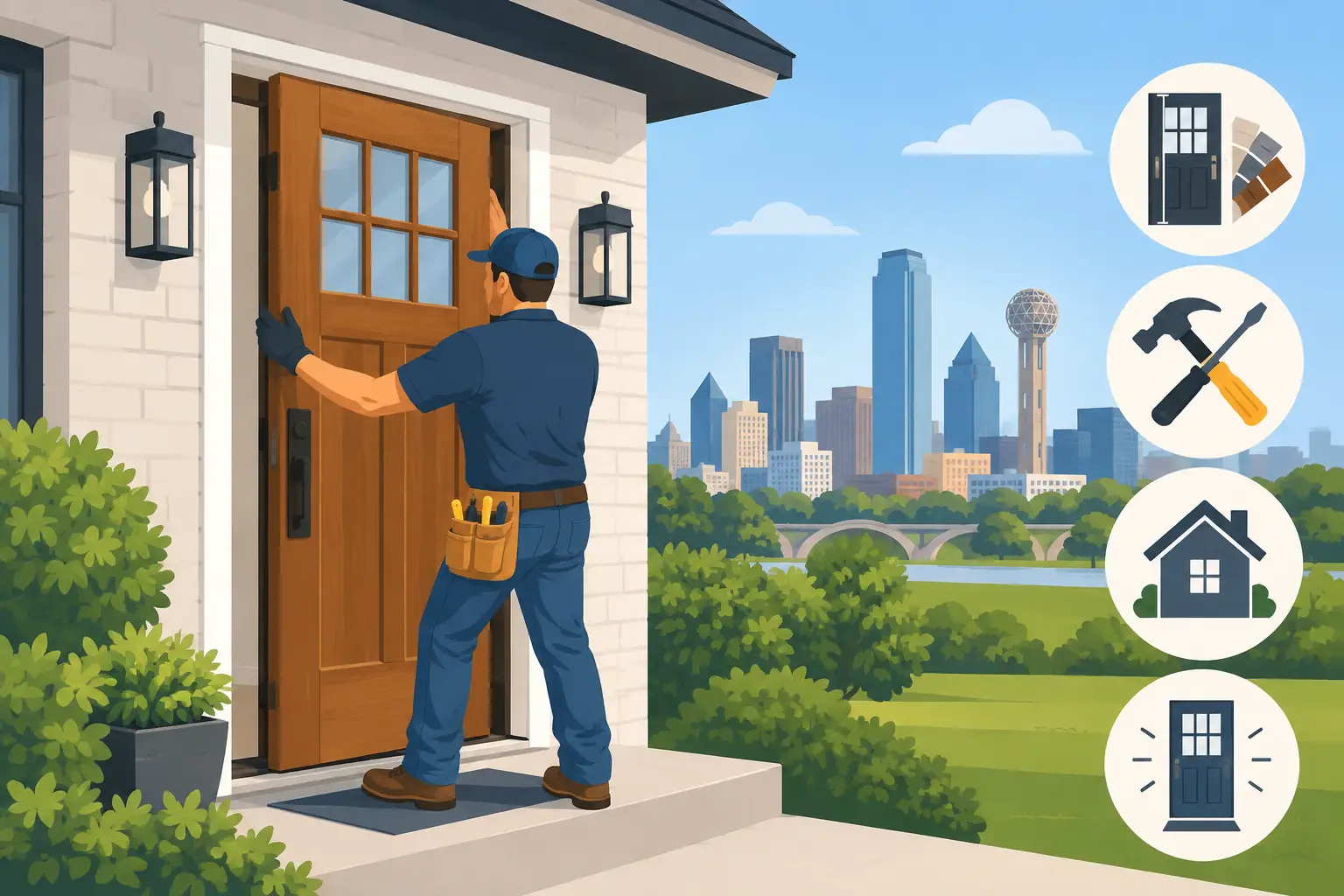
A door that sticks, leaks air, rattles in the wind, or no longer locks with confidence is more than an inconvenience. In Fort Worth, intense sun, sudden rain, heat, and seasonal movement can expose weak doors and failing frames quickly. This door replacement project guide helps homeowners make sound decisions before materials are ordered or work begins.
Door replacement can be a focused repair or part of a larger exterior, flooring, trim, or whole-home renovation. The right scope depends on what is causing the problem. Replacing only the slab may be appropriate in a well-built, square frame. When the frame is rotted, the threshold has failed, or the opening is out of alignment, a complete replacement is usually the better long-term investment.
Start Your Door Replacement Project With the Opening
Before choosing a style or color, evaluate the opening itself. A quality door installation begins with accurate measurements, but measuring width and height alone is not enough. The installer should check the rough opening, jamb condition, floor level, wall plumb, exterior trim, weather barrier, and clearance around the door.
This matters because doors operate as a system. A new slab installed in a warped jamb can still bind, leave uneven gaps, or fail to seal properly. An exterior door installed without proper flashing and sill protection can allow water behind the trim, where damage may not be visible until it has spread.
For an existing opening, look for warning signs such as soft wood near the sill, cracked caulk, daylight around the perimeter, stains on nearby drywall, loose hinges, or a deadbolt that does not engage smoothly. These issues do not always mean extensive structural work is needed, but they should be addressed before the new door is installed.
If the project involves widening an entry, adding French doors, installing a sliding patio door, or changing a window into a door, the work becomes more involved. Structural framing may need to be modified, and the opening may require a properly sized header and permits depending on the scope. This is not a place for guesswork. Proper framing protects the wall, the new unit, and the rest of the home.
Door Replacement Project Guide: Choose the Right Door Type
The best door is not necessarily the most expensive one. It is the one that fits the location, how your household uses it, your maintenance expectations, and the character of the home.
For a front entry, fiberglass is often a practical choice for North Texas homes. It can provide the appearance of wood with less risk of swelling, splitting, or frequent refinishing. Many fiberglass units are available with insulated cores and decorative glass options. Steel entry doors can also offer strong security and value, though scratches must be repaired promptly to prevent corrosion.
Wood doors bring natural warmth and can be an excellent choice for a protected entry or a home with traditional architectural details. They do require maintenance, especially when exposed to direct afternoon sun or rain. A quality finish, properly maintained caulking, and a sufficient overhang make a meaningful difference in service life.
For interior rooms, the decision often comes down to function. Solid-core doors provide a more substantial feel and better sound control for bedrooms, home offices, bathrooms, and laundry areas. Hollow-core doors cost less and work well in lower-impact areas, but they are easier to damage and do little to reduce noise.
Patio and rear doors deserve extra attention because they affect both security and energy use. Sliding doors preserve floor space, while hinged French doors create a wider, more traditional opening. Either option should have reliable locking hardware, durable rollers or hinges, low-maintenance finishes, and weatherstripping designed for the unit. The right choice depends on furniture placement, traffic flow, and how often the door will be used.
Match the Frame, Trim, and Hardware
A door replacement should look intentional, not pieced together. That does not mean every component must be replaced, but the new door should work with the surrounding trim, siding, flooring, and interior finishes.
Exterior trim may need replacement if it has water damage or cannot be removed without breaking. Interior casing may be reusable, though repainting or touch-up work is common after installation. If new flooring is planned, coordinate the door project early. Floor height can affect threshold clearance, swing direction, and transitions at the opening.
Hardware deserves the same planning. Confirm the handing of the door, which way it swings, whether it needs a lever or knob, and the preferred finish. A front entry may need a deadbolt, smart lock, peephole, or multipoint locking system. Interior bathroom doors need privacy hardware, while a closet may only need a passage latch. Ordering hardware late can delay completion or lead to mismatched holes in the door.
Proper Installation Is What Makes a New Door Perform
A door can be well made and still perform poorly when installation is rushed. The goal is not simply to get the door in the opening. It must be level, plumb, square, securely fastened, properly shimmed, and sealed according to the manufacturer’s specifications.
For an exterior unit, the crew should protect the surrounding work area, remove the existing door carefully, inspect the framing, and repair damaged wood before setting the new unit. The sill area needs special attention because water naturally collects there. Appropriate flashing, sealant, and weather-resistant detailing direct water away from the home rather than trapping it behind trim.
Once the unit is set, the reveal around the door should be even and the door should open, close, and latch without force. The sweep should contact the threshold correctly, and weatherstripping should compress enough to seal without making the door difficult to operate. The lock and deadbolt should align naturally, not require lifting, pushing, or pulling on the door to engage.
Insulation around the frame is also important. Overfilling gaps with expanding foam can bow the jamb and affect operation. A controlled application of low-expansion foam or appropriate insulation, followed by interior and exterior trim work, helps finish the opening without creating new problems.
For occupied homes, workmanship also includes protecting floors, nearby furniture, landscaping, and finished surfaces. Dust control and a clean work area are part of respecting the homeowner’s property, particularly when door replacement is part of a larger remodel.
Set a Realistic Budget and Scope
Door costs vary widely based on material, size, glass, hardware, sidelights, custom sizing, framing repairs, and finish work. A standard interior door replacement is typically much simpler than replacing a custom front entry with sidelights or enlarging a patio opening.
The lowest initial quote is not always the lowest project cost. Ask what is included: removal and disposal, frame repair, exterior trim, paint or stain touch-ups, weatherproofing, hardware installation, and cleanup. If the existing conditions are unknown until the old unit is removed, discuss how concealed rot or framing repairs will be documented and priced.
A clear estimate should separate the door unit, labor, and likely repair allowances when appropriate. This gives you a better basis for comparison and helps prevent surprises after work is underway. At Barrington One Construction, the approach is to look beyond the visible door and plan for the details that determine whether the finished work lasts.
Plan Around Weather and Daily Use
Most door replacements can be completed efficiently, but timing still matters. Avoid scheduling exterior work when severe weather is expected if possible. A professional crew can protect an opening during normal conditions, yet dry weather makes removal, flashing, and exterior finish work more dependable.
Consider household logistics as well. If the front door is being replaced, arrange for pets, children, deliveries, and security during the work window. For patio doors, move furniture away from the opening and discuss access routes in advance. A little preparation keeps the job orderly and allows the installer to focus on fit and finish.
A well-planned door replacement gives you better security, improved comfort, and a cleaner appearance every time you come home. Choose the right unit, address the condition of the opening, and insist on installation details that protect your investment long after the crew has left.