A replacement window should solve a problem you can feel or see: a draft near the sofa, fading floors, a window that sticks, outside traffic that carries through the glass, or an exterior that has simply reached the end of its service life. Knowing how to select replacement windows starts with identifying those problems before choosing a frame color or comparing a sale price. The best window for your neighbor may not be the best fit for your home, your opening, or North Texas weather.
Replacement windows are a long-term investment in comfort, appearance, and maintenance. A good decision accounts for the window itself, but also for the condition of the surrounding wall, trim, flashing, and installation details. A quality product installed carelessly can still leak air or water.
Start With the Window’s Job
Before selecting a style, decide what each window needs to do. A large living room window may be about natural light and a clear view. A bedroom window may need easier operation and a dependable emergency exit. A west-facing room may need stronger protection from afternoon heat, while a bathroom may benefit from privacy and ventilation.
Walk through the house at different times of day. Note rooms that feel hotter, colder, darker, or noisier than they should. Look for condensation between glass panes, water staining at the sill, soft wood, peeling paint, and gaps around the frame. These details help separate a simple window replacement from a larger repair involving trim, siding, framing, or water management.
This is also the right time to decide whether you want to preserve the existing opening or change it. Keeping the same size is generally more straightforward. Enlarging a window, combining openings, or adding a new one can dramatically improve a room, but it may require structural framing, exterior finish work, permits, and a more involved project plan.
Choose the Right Window Style for the Room
Window style affects ventilation, cleaning, energy performance, and the appearance of the home. It should support how the room is used, not just follow a trend.
Double-hung windows are familiar in many traditional homes. Both sashes can move, which gives you ventilation options and a classic look. Casement windows hinge outward and seal tightly when closed, making them a strong choice where airflow and energy efficiency matter. They work well over kitchen counters because a crank is often easier to reach than a lifted sash.
Sliding windows are practical for wider openings and areas where an outward-swinging sash would interfere with a walkway, patio, or landscaping. Picture windows bring in broad views and daylight but do not open, so they are often paired with operable windows nearby. Awning windows can provide ventilation during light rain, while bay and bow windows add dimension, seating opportunities, and more light at a higher project cost.
For bedrooms, do not overlook emergency escape requirements. If a window is intended to serve as an egress opening, its clear opening size, sill height, and operation must meet applicable code requirements. A window that looks large from the outside may not provide enough usable opening once the sash is open.
Compare Frame Materials Beyond the Price Tag
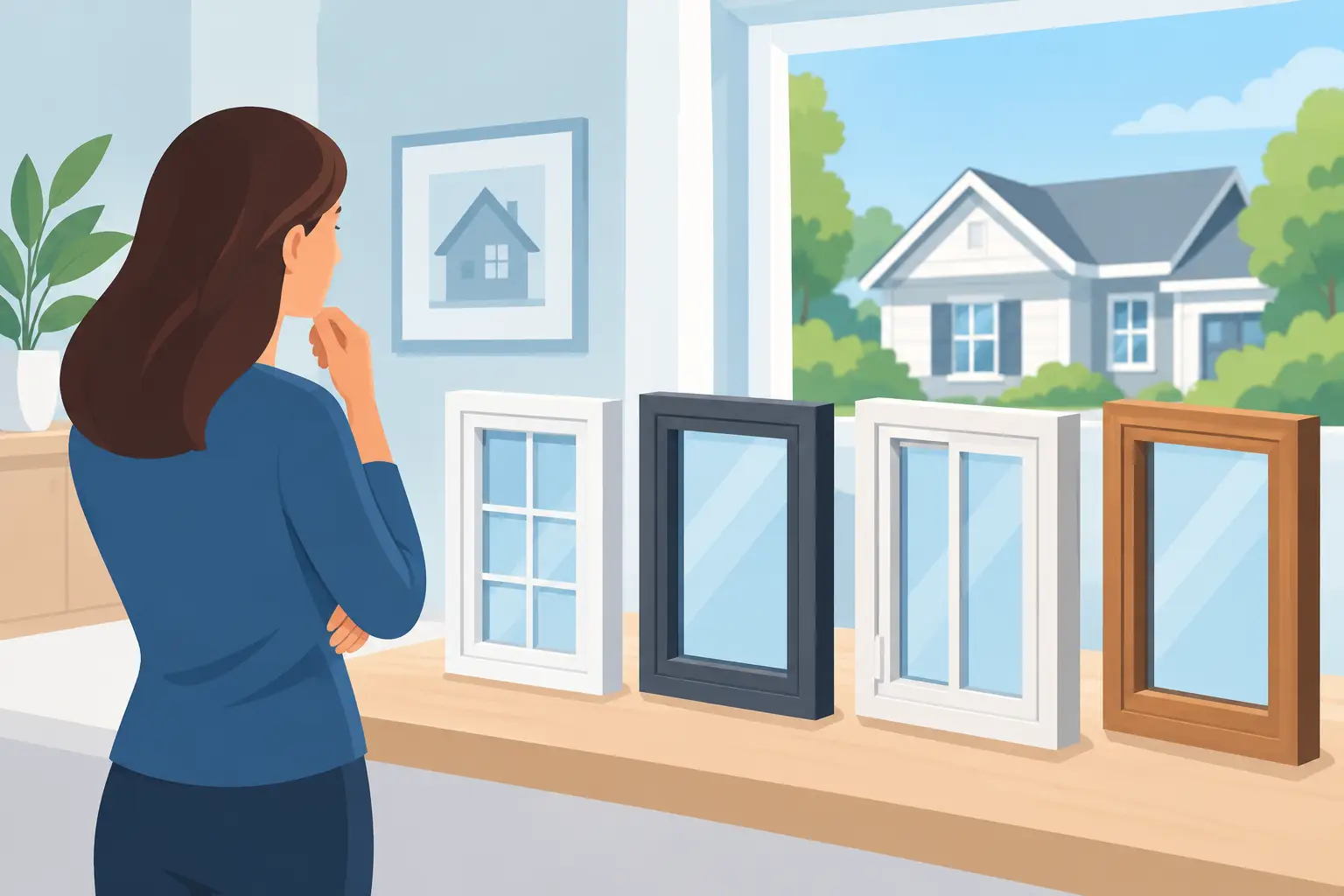
Most homeowners consider vinyl, fiberglass, wood, or composite frames. Each can be a good choice when it is matched to the home, budget, and maintenance expectations.
Vinyl windows are popular because they are cost-effective, low maintenance, and available in many standard configurations. Quality varies, however. Look beyond the lowest price and ask about frame construction, reinforcement, color options, warranty coverage, and how the material performs in sustained heat.
Fiberglass frames are typically more rigid and can handle temperature changes well. They often carry a higher initial cost, but they can be an excellent fit for homeowners who want strength, a narrower frame profile, and a long service life. Composite products vary by manufacturer but may offer a wood-like appearance with lower maintenance than traditional wood.
Wood windows remain a strong choice for historic homes, detailed interiors, and projects where stain-grade finishes or exact architectural character matter. They require more maintenance, especially on exposed exterior surfaces. In many cases, a wood interior with a protected exterior cladding offers a practical balance between appearance and durability.
The right material depends on where the window is located and what it must match. A single window in an older home may need to blend with existing trim and sightlines. A full-house replacement may place more emphasis on consistency, efficiency, and maintenance over time.
Select Glass for Fort Worth Heat and Sun
The glass package has a major effect on comfort. In Fort Worth, the concern is often solar heat gain as much as winter heat loss. Standard double-pane insulated glass is common, but the coatings and gas fill between panes make a meaningful difference.
Low-emissivity, or Low-E, coatings help manage radiant heat and ultraviolet exposure. The right coating can reduce heat entering the home while still allowing useful natural light. This matters in rooms with strong west or south exposure, where direct sun can make a comfortable room feel difficult to use by late afternoon.
Ask about U-factor and Solar Heat Gain Coefficient, often called SHGC. A lower U-factor generally indicates better resistance to heat transfer. SHGC indicates how much solar radiation passes through the window. Lower solar heat gain can be helpful in sunny Texas exposures, but there is a trade-off: heavily tinted or highly restrictive glass may reduce visible light or change the appearance of the view.
If street noise is a concern, glass thickness and laminated glass options may help, though they are not a complete cure for sound. Air leakage around the frame, wall insulation, and the quality of installation all affect how much noise reaches the room.
How to Select Replacement Windows With the Whole House in Mind
A replacement window should look like it belongs on the house. Match the window grid pattern, divided-light style, exterior color, trim depth, and proportions to the architecture whenever possible. A modern black-frame window may look excellent on the right home, but it can feel out of place if it conflicts with traditional brick, shutters, or existing openings.
Consider interior details as well. New windows may change the depth of the jamb, the profile of the casing, or the amount of glass visible from the room. If you are remodeling a kitchen, bathroom, or addition, window decisions should be made alongside cabinetry, tile, lighting, and wall layout. Waiting until late in the project can limit your options and create unnecessary rework.
For exterior projects, evaluate the condition of siding, brick molding, caulk joints, and drainage around the opening. Installing a new window without addressing damaged wood or failed flashing only covers up the cause of the problem. Proper repair before installation protects the investment and prevents a small issue from becoming a larger wall repair later.
Do Not Treat Installation as an Afterthought
The window is only one part of the system. Accurate measurement, level and plumb placement, proper shimming, insulation, flashing, sealants, and exterior trim work determine whether the finished window performs as intended.
Ask a contractor how they handle hidden damage found after an old window is removed. The answer should be clear. A professional should explain how rot, framing concerns, or water intrusion will be documented, repaired, and priced before work continues. Homeowners deserve to know what is behind the trim, not be surprised after the project is complete.
Also ask who is responsible for protecting floors, landscaping, furniture, and exterior finishes during the work. Window replacement can create dust and debris, particularly when interior trim or drywall must be adjusted. Careful preparation and daily cleanup are part of workmanship, not an optional extra.
Set a Budget Around Value, Not Just Window Cost
The lowest bid may exclude trim repairs, disposal, upgraded glass, proper flashing, or finish work needed for a complete result. Compare estimates line by line. Confirm the window manufacturer, series, glass package, hardware finish, screens, labor scope, warranty, and any anticipated carpentry or paint work.
It is reasonable to prioritize rooms if a whole-house replacement is not in the budget. Start with windows that leak, show rot, fail to operate, or receive the harshest sun exposure. Then create a plan for the remaining windows so future replacements match in style and performance.
At Barrington One Construction, we approach window-related work as part of the home, not as an isolated product swap. That means looking at the opening, surrounding finishes, water protection, and the practical goals behind the project.
A well-chosen replacement window should disappear into daily life. It should open when needed, keep the room more comfortable, complement the home, and give you confidence that the work behind the trim was done correctly. Take the time to compare the full scope, because the details you cannot see are often the ones that protect your home for years to come.