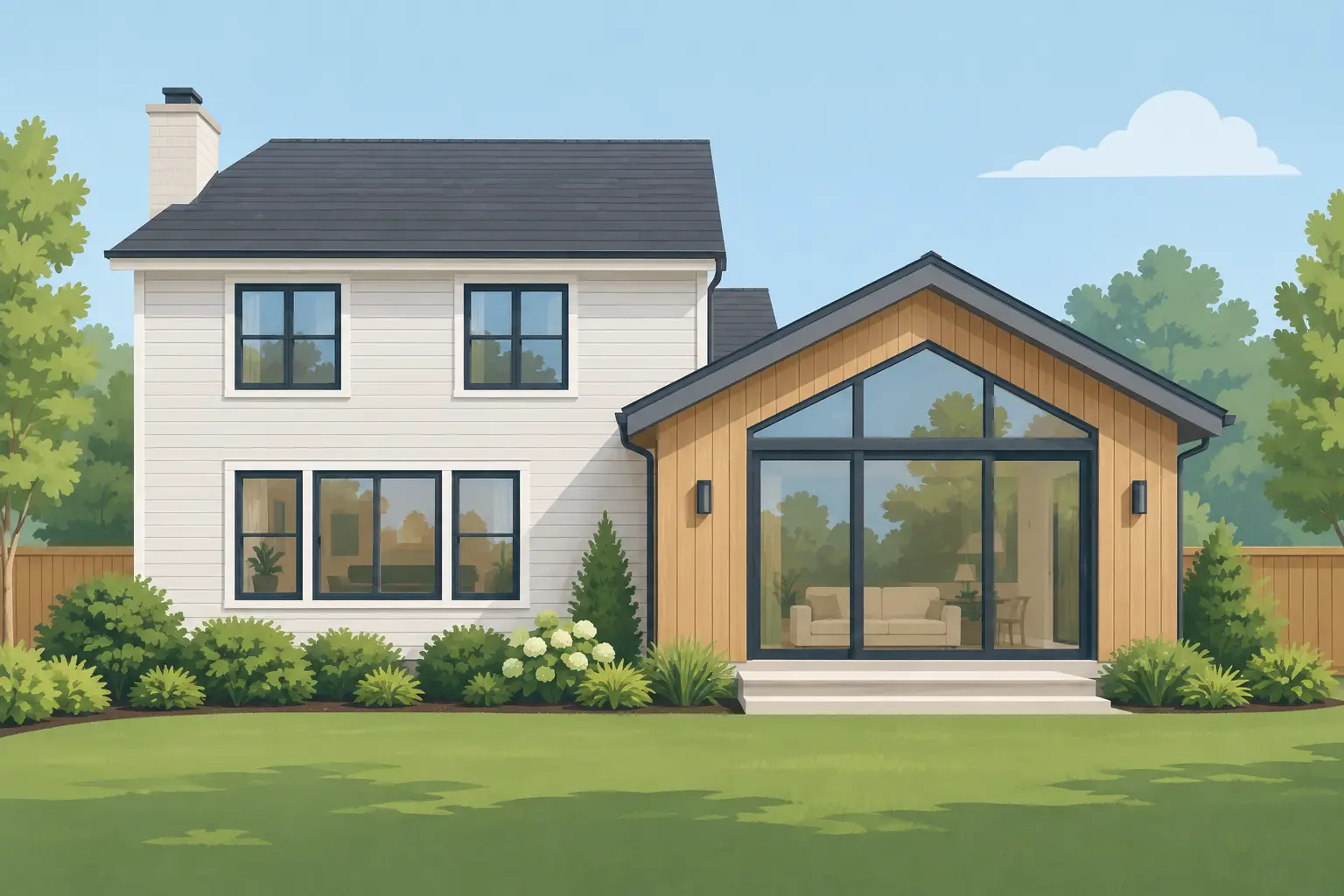
A room addition should make your home work better without announcing where the original house ends and the new construction begins. Knowing how to match an addition exterior means looking beyond a close paint color or similar brick. The roof, wall depth, window placement, trim, drainage, and finishing details all need to work together. When they do, the addition looks intentional, protects your investment, and holds up to Fort Worth heat, storms, and changing weather.
Start With the Parts That Define Your Home
Before selecting materials, study the existing house as a complete system. A contractor should measure the roof pitch, overhangs, wall heights, siding or brick dimensions, window proportions, trim profiles, and foundation exposure. Photos are useful, but field measurements tell the real story.
Architecture matters here. A ranch-style home often depends on long, low rooflines and broad eaves. A traditional brick home may rely on symmetrical windows, painted wood trim, and a consistent mortar color. A newer home may use mixed materials, such as brick with fiber-cement siding and stained wood accents. An addition does not need to copy every feature exactly, but it should follow the same design language.
The most successful projects also account for sightlines. What people see from the street usually carries the most weight, but side-yard and backyard additions deserve the same care. A mismatch that is hidden from the front can still affect resale value and make the home feel unfinished when you use the outdoor living areas.
How to Match an Addition Exterior Without Guesswork
Exterior matching is not one decision. It is a series of connected decisions, and changing one detail can affect several others. For example, a new roofline may require altered gutters, different flashing, revised window headers, or a transition where old and new brick meet.
Match the roofline before the wall finish
The roof is often the first thing people notice. If the new addition has a pitch that does not relate to the existing roof, matching brick or siding will not fix the problem. The roof should tie in at a practical height, shed water correctly, and avoid awkward valleys where debris and moisture can collect.
In some cases, an exact roof pitch match is not structurally possible because of existing ceiling heights, window locations, or the layout of the addition. A skilled design can still make the transition look deliberate. This may involve stepping the roof back, using a gable that complements the main house, or creating a lower connector section rather than forcing an unnatural tie-in.
Roofing material also matters. If the existing shingles are newer and available, an exact match may be possible. If they are faded, discontinued, or nearing the end of their service life, a close match can look noticeably different in the Texas sun. Homeowners sometimes choose to reroof the entire home during a major addition for a unified appearance and consistent warranty coverage. That adds cost, but it can be the better long-term decision.
Treat brick and siding as more than color choices
Brick is difficult to match because color is only one variable. Size, texture, kiln variation, mortar color, mortar joint profile, and installation pattern all affect the final appearance. Even brick from the same manufacturer can vary from one production run to another.
If an exact brick match is unavailable, the goal is to create a transition that looks intentional rather than almost right. A complementary brick, a defined section of siding, or a well-placed architectural break may work better than forcing a near match across a large wall. On some homes, using the original brick on the most visible area and introducing a compatible material on a less prominent elevation is a practical solution.
For siding, identify the product type before choosing replacements. Wood, engineered wood, fiber-cement, vinyl, and composite siding have different dimensions, textures, and installation requirements. Fiber-cement siding, for example, can be an excellent choice for durability, but it needs correct clearances, flashing, fastening, and paint application. Material that looks right on installation day can fail early if those details are ignored.
Keep windows, doors, and trim in proportion
A common reason additions look added on is that the windows are too large, too small, or placed at the wrong height. Match the existing window style where possible, including grille pattern, frame color, trim width, and head height. A new window does not have to be the same size as every existing opening, especially when the room function requires something different, but it should relate to the home’s established proportions.
Exterior doors deserve the same attention. A patio door, service door, or new entry should coordinate with the home rather than introduce an unrelated style. Hardware, glass configuration, sidelights, and trim can make a significant difference.
Trim is often where craftsmanship shows. Corner boards, fascia, soffits, rake boards, window casings, and band boards need to align cleanly. Small inconsistencies become visible from the curb, particularly on light-colored homes where shadows emphasize uneven lines.
Plan for Foundation, Drainage, and Wall Depth
A clean-looking exterior still has to perform. The foundation height of the addition should relate appropriately to the existing home, while allowing proper drainage away from the structure. In North Texas, expansive soils make sound foundation planning especially important. The addition must be designed for the site conditions, not simply attached where there is open space.
Wall depth is another detail homeowners may not notice until it is wrong. A new wall that sits noticeably proud of, or recessed from, the original exterior can create an abrupt joint. Sometimes that condition is unavoidable, but careful trim, material transitions, or a planned bump-out can make it look intentional.
Water management should be resolved before finishes go on. This includes kickout flashing where roofs meet walls, proper step flashing, drip edges, housewrap or other weather-resistive barriers, flashing around windows and doors, and gutter placement. These are not decorative items. They protect the framing, insulation, drywall, and finishes inside the home.
Do Not Rely on Samples Alone
A brick chip, siding sample, or paint card is useful, but it cannot show how a material will look across an entire elevation. Materials change in direct sun, afternoon shade, and after rain. Paint colors can read much warmer or cooler next to existing brick, stone, or roofing.
Whenever possible, review larger samples against the home at different times of day. Compare them beside existing materials, not in isolation. This is especially important for exterior paint. The right color may be a close match to the original or a coordinated update applied to both old and new trim so the entire house reads as one project.
It is also wise to inspect the existing exterior for repairs before tying in the addition. Failing caulk, damaged fascia, aging gutters, cracked siding, or deteriorated trim should be addressed. A new addition can make worn portions of the original home stand out more sharply.
Choose a Contractor Who Can Coordinate the Entire Exterior
Matching an addition exterior requires more than a framing crew and a material order. It takes coordinated planning among structural work, roofing, masonry, siding, window installation, painting, and drainage. When each trade works from a different assumption, the details at the transitions suffer.
A full-service remodeling contractor can identify these issues during planning, provide a clear estimate, and maintain accountability through completion. At Barrington One Construction, the focus is on practical design, proper installation, and protecting the homeowner’s property throughout the work. No high-pressure sales and no passing the coordination burden back to the homeowner.
The lowest initial price is not always the best value if it leaves you with mismatched materials, weak weather protection, or change orders caused by missed details. Ask how the contractor will handle discontinued materials, roof transitions, brick matching, permits, drainage, and final paint or trim touch-ups. Specific answers are a better sign than broad promises.
A well-matched addition should feel like it has always belonged to the home. Take the time to get the proportions, materials, and weatherproofing right, and the result will serve your family well without compromising the character that made you want to stay in the house.