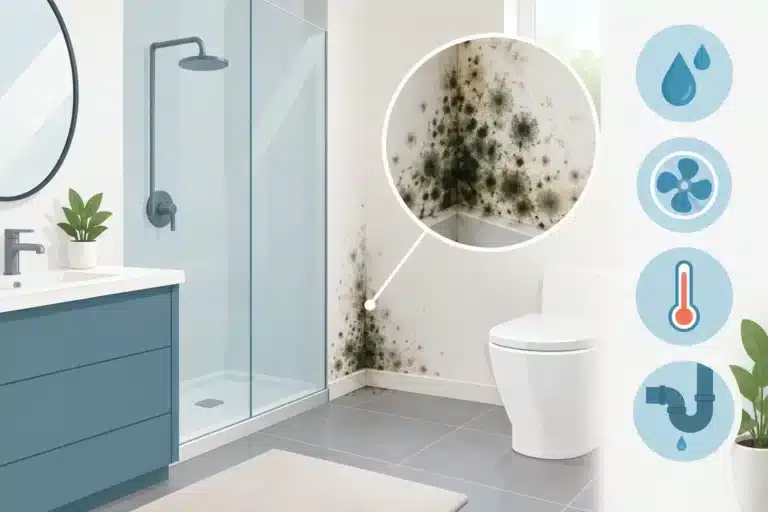
A water spot on the ceiling, a warped baseboard, or a bathroom floor that suddenly feels soft can be more than a cosmetic problem. Knowing how to assess water damage early helps you protect your home, prevent a small leak from becoming a major repair, and make sound decisions before remodeling work begins.
The first rule is simple: stop the water source if it is safe to do so. Shut off the fixture valve, turn off the home’s main water supply if necessary, or move belongings away from an active leak. If water is near electrical outlets, a breaker panel, or appliances, stay clear of the area and call a qualified professional. Safety comes before inspection.
Start With the Water Source
Water damage rarely begins where it becomes visible. A brown ceiling stain below an upstairs bathroom may point to a leaking supply line, shower pan, toilet seal, drain connection, or failed waterproofing behind the tile. Water at the bottom of an exterior wall can come from a roof leak, flashing issue, window failure, clogged gutter, foundation drainage problem, or an irrigation line.
Before focusing on damaged finishes, consider when the problem appears. Damage that worsens after rain usually calls for an exterior investigation. Moisture that appears after someone showers, runs the dishwasher, or uses a washing machine points more directly to plumbing or an appliance connection. A leak that seems constant even when fixtures are not in use may involve a pressurized supply line.
This distinction matters because replacing drywall or flooring without correcting the source only creates the same problem again. Proper repairs start with diagnosis, not surface patching.
How to Assess Water Damage Room by Room
A careful inspection should move outward from the suspected source. Look at ceilings, walls, trim, flooring, cabinets, nearby closets, and the rooms directly below or behind the affected area. Water follows framing, pipes, gravity, and low points, so the visible stain is not always the full extent of the damage.
Check ceilings and walls
Look for discoloration, peeling paint, bubbling drywall tape, sagging areas, cracked texture, or a musty odor. Press gently on suspicious drywall only if there is no electrical concern. Drywall that feels soft, crumbly, swollen, or unusually cool may have absorbed moisture.
Ceiling damage deserves prompt attention. Wet drywall becomes heavy, and a sagging ceiling can fail without much warning. If you see a large bulge, active dripping, or extensive sagging, keep people out of the area until it can be evaluated safely.
Inspect floors, trim, and cabinets
Wood and laminate flooring often show water damage through cupping, buckling, lifted edges, gaps, or dark staining. Tile may remain intact while the materials below it are wet, especially around toilets, tubs, showers, and exterior doors. A loose tile, cracked grout line, or soft area at the edge of a tiled floor can indicate movement or moisture beneath the finished surface.
Check baseboards and door casing for swelling or separation from the wall. In kitchens and bathrooms, open cabinet doors and inspect the cabinet floor, toe kicks, and wall behind plumbing. Particleboard cabinets can swell quickly and lose structural strength after exposure to water. A cabinet may look acceptable from the front while the bottom is deteriorating out of sight.
Use your senses, but do not rely on them alone
Musty odors, damp air, visible stains, and changes in material texture are useful clues. They are not a complete moisture test. A wall can feel dry on the surface while insulation, framing, or the back side of drywall remains wet.
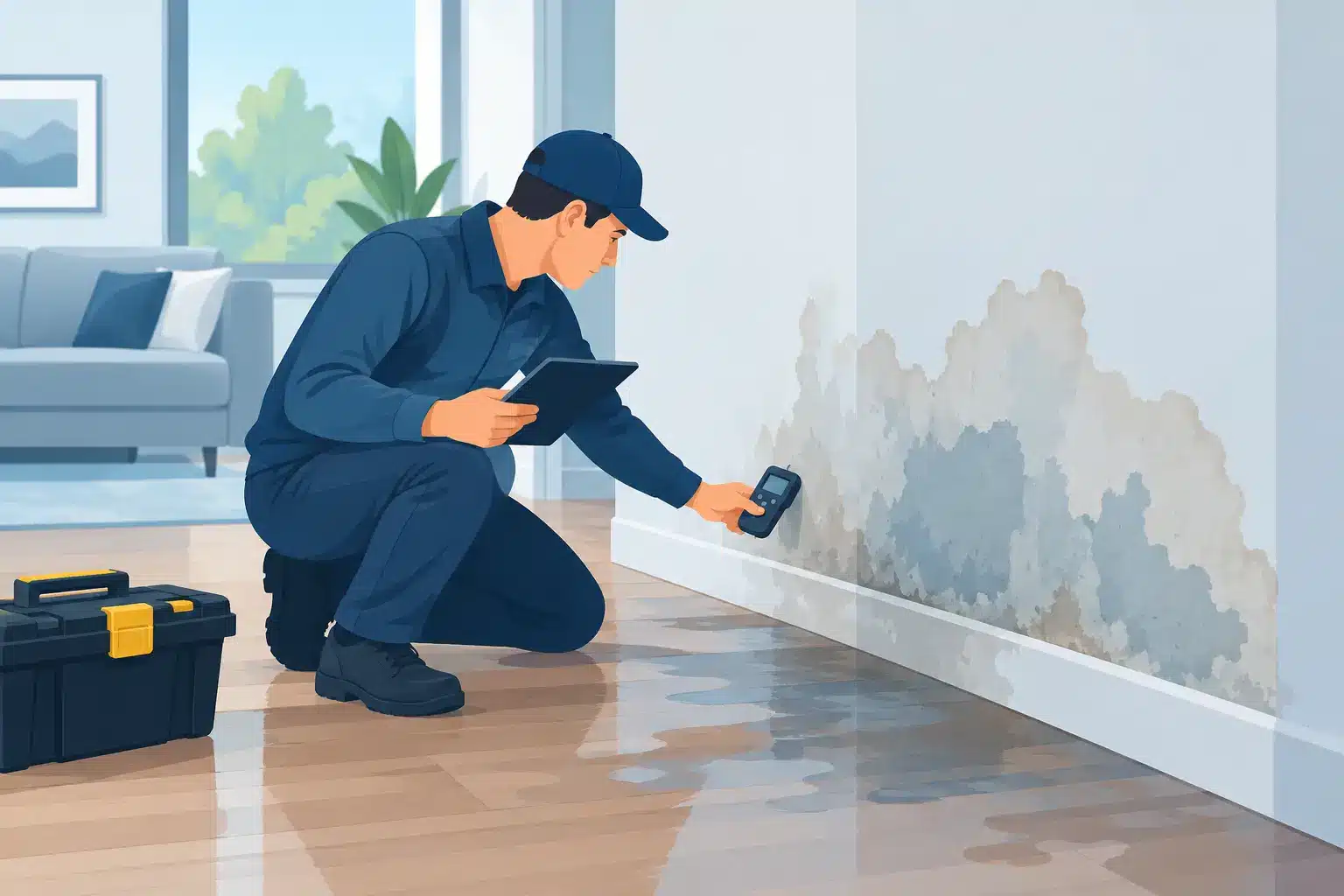
A moisture meter and infrared camera can help identify conditions that are not visible, but readings require interpretation. Temperature differences on an infrared image may suggest moisture, yet they can also result from insulation gaps or air movement. The most reliable assessment combines visual inspection, moisture readings, knowledge of the building assembly, and verification of the water source.
Classify the Water Before Planning Repairs
Not all water exposure is handled the same way. Clean water from a fresh supply line leak may allow some materials to be dried and saved if the response is quick. Gray water from a washing machine, dishwasher, or shower drain may contain contaminants and requires more caution. Water from a sewer backup, toilet overflow involving waste, or outdoor flooding is considered contaminated and can create a health concern.
When contaminated water is involved, porous materials such as insulation, carpet padding, drywall, and some cabinetry often need removal rather than drying alone. Do not assume that bleach or a surface cleaning will make damaged materials safe. The correct scope depends on the source, how long the water sat, which materials were affected, and whether moisture reached concealed cavities.
Fort Worth homeowners should also take storm-related water seriously. Wind-driven rain can enter through roof penetrations, siding transitions, windows, and doors, then travel inside wall or ceiling assemblies. Floodwater introduces a different level of contamination and may affect foundations, exterior finishes, insulation, and mechanical systems.
Document What You Find Before Anything Is Removed
Take clear photos and video before cleanup or demolition begins. Capture the source if possible, the affected rooms, close-ups of staining and damaged materials, and wider shots that show location. Record the date, when you first noticed the issue, weather conditions if relevant, and any steps taken to stop the water.
Documentation can support an insurance claim, but it also helps your repair team understand the sequence of events. If a contractor opens a wall, removes damaged flooring, or disconnects cabinetry, the original conditions may no longer be visible. Good records create a more accurate repair plan and reduce confusion about what needs to be restored.
If you plan to file a claim, contact your insurer promptly and follow its direction on emergency mitigation. At the same time, do not delay reasonable action to prevent additional damage. Saving wet drywall, carpet, or cabinets simply because an adjuster has not yet visited can increase the repair scope.
Decide What Can Be Dried and What Must Be Repaired
The answer depends on material type, water category, exposure time, and the condition of the assembly behind the finish. Nonporous materials, such as metal, glass, and many plastic surfaces, can often be cleaned and dried. Solid wood may sometimes be saved with controlled drying and refinishing, although it can warp or stain.
Drywall, insulation, engineered wood products, laminate flooring, and particleboard cabinetry are less forgiving. Once these materials swell, delaminate, lose strength, or develop microbial growth, replacement is often the more dependable option. Attempting to preserve compromised materials may lower today’s cost but lead to callbacks, odors, movement, or visible finish problems later.
This is especially relevant when the damage occurs in a bathroom or kitchen. These rooms depend on correct waterproofing, substrate preparation, and precise installation details. A repair that only replaces surface tile without addressing a failed shower pan, wet subfloor, or damaged wall framing is not a lasting repair.
Know When to Bring in a Professional
A homeowner can often identify a small, contained leak under a sink and take reasonable first steps. Professional evaluation is the better choice when water has entered walls, ceilings, flooring systems, cabinets, or structural framing; when the source is unclear; or when contamination, mold-like growth, electrical exposure, or a sagging ceiling is present.
A qualified contractor can help determine the actual repair boundary, coordinate necessary trades, and rebuild affected areas with compatible materials. For a remodeling project, this may include framing repairs, subfloor replacement, drywall, insulation, tile, flooring, cabinetry, trim, paint, and exterior corrections that prevent repeat intrusion. Barrington One Construction approaches this work with the same attention to proper installation and homeowner protection used on larger renovation projects.
Water damage is stressful because it creates uncertainty: what is wet, what is still sound, and what could fail later? A measured assessment replaces guesswork with a clear plan. Address the source, verify the full extent of moisture, and repair the assembly correctly so your home is ready for the years ahead.